
Home » Roofing » Roofing Contractor in Grosse Pointe Woods, MI
The usual guidance applies here and it is worth repeating: verify the license, get insurance certificates from the carrier, read the scope. What deserves more attention in this particular city is a different risk, and it is not being underserved. A roofing contractor Grosse Pointe Woods MI homeowners hire should be quoting the house in front of them rather than the address on the envelope.
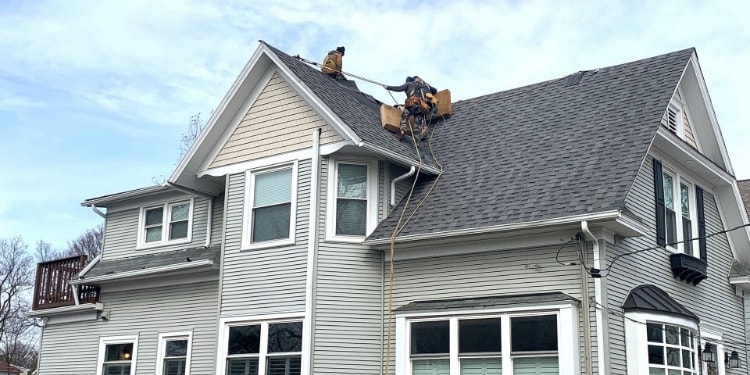
Contractors who work the Pointes develop assumptions from the older communities: slate is likely, copper is appropriate, premium systems are expected, and budgets are generous. Carried into the Woods, those assumptions produce quotes that are technically excellent and substantially larger than your house requires.
This is rarely dishonest. It is habit, and sometimes it is a genuine belief that better is better. But a copper valley under a thirty-year asphalt roof will outlive that roof by decades and then get torn out, and a designer profile on a modest ranch is buying appearance rather than performance.
The test is simple. For every premium item on a quote, ask what problem it solves on your specific roof. A good contractor will either give you a concrete answer or tell you plainly that it is optional. One who cannot articulate the benefit is quoting from habit.
Equally, do not read this as an argument for the cheapest bid. There are places where spending more genuinely pays, and they are mostly invisible: ventilation correction, membrane coverage, and doing the addition tie-ins properly.
Before you compare anything, find out how many layers of asphalt are on your roof. A contractor can check at the eave or a penetration in a couple of minutes.
This matters because Michigan code caps asphalt at two layers, and a great many Woods homes are already at two. If you are, a tear-off is mandatory, and any quote proposing a layover is either mistaken or intending to do something it should not.
If you are at one layer, you have a genuine choice, and the two quote types are not comparable on price alone. A layover costs less and hides your decking condition, which on a seventy-year-old house is information worth having.
Two checks, neither of which takes long. Ask for the contractor's Michigan license number in writing rather than accepting a verbal claim, then look it up. The registry is maintained by the Michigan Department of Licensing and Regulatory Affairs and the search is free.
Request both certificates of insurance directly from the carrier: general liability for property damage, workers' compensation for the crew. Standard coverage levels are generally appropriate here, which is itself a difference from the estate properties a few minutes east.
Spreads here usually come from four places, and once you know them the comparison becomes straightforward.
Tear-off versus layover. The single biggest difference, and often the reason one quote looks dramatically cheaper. Confirm which each quote assumes.
Decking allowance. How many sheets are included and what is the per-sheet price beyond that. A quote with a generous allowance and one with none are priced differently for a reason you will discover mid-project.
Ventilation. Whether it is addressed at all. Many quotes are silent, and on a cape or a house with finished roof space that silence is a real omission.
Tie-in and flashing detail. Whether addition junctions, the garage connection, and any low-slope breezeway are specified as their own work rather than absorbed into a per-square number.
Two quotes matching on shingle brand and differing by several thousand dollars almost always differ on one of these four.
Most contractor screening questions invite a rehearsed reply. These do not, because they require the person to have actually looked at your roof.
How many layers am I at, and how did you check? The answer should involve the eave or a penetration, not an estimate from the driveway.
Which additions does my house have, and how are those junctions detailed now? A contractor who has been on the roof can describe them. One who has not will speak generally.
Is my soffit intake working? This requires having been in the attic. It is also the item most likely to be the actual problem.
What on this quote is optional? An honest contractor will separate necessary from nice, and will not be offended by the question.
What would you do if it were your house? Worth asking last, and worth listening to the reasoning rather than the answer.
Worth saying explicitly, because it comes up constantly in this city and homeowners rarely hear it from someone quoting the work.
Woods roofs fail at discrete points rather than comprehensively. A cracked pipe boot, a missing kickout, a failed tie-in at a 1978 family room addition, or a garage connector with the wrong material on it are each real repairs on a roof with years of life remaining.
The honest test is whether the field itself is finished. Widespread granule loss, curling across multiple slopes, and brittleness mean replacement. Isolated failures on a field that still has seal and flexibility mean repair, regardless of the roof's age on paper.
If three contractors all quote full replacement and none of them mentioned repair as an option, it is reasonable to ask a fourth specifically about it.
A reasonable deposit, a progress payment at material delivery, and the balance at completion and final inspection. Most Woods homes are a one to two day job, so a contractor requiring full payment up front on a project of this length has no defensible reason for it.





Ask what it solves on your roof. Copper outlasts asphalt by decades, which is excellent under slate and largely wasted under a thirty-year shingle.
Any contractor can check at the eave in minutes. Do this before comparing quotes, since it determines whether a layover is even legal.
Usually tear-off versus layover, decking allowance, ventilation, or tie-in detail. Compare those four before comparing totals.
Sometimes, if the scopes genuinely match. Check that they do rather than assuming they must.
Yes, and it should mention intake rather than only a ridge vent. Exhaust without intake accomplishes very little.
Free inspection with your layer count established, a written itemized scope, and a straight answer about what your house actually needs.
Call 734-367-4867 or request an estimate online.