
Home » Roofing » Roofing Company in Grosse Pointe, MI
The City of Grosse Pointe is roughly a square mile, and within it you will find Colonial Revival, Tudor, Arts and Crafts, Mediterranean, and postwar infill, frequently on the same block. Homeowners searching for a roofing company Grosse Pointe MI can send out are not looking for volume capability. They are looking for someone who can tell what kind of house they are standing in front of and specify accordingly.
This is the smallest and densest of the Pointes. Lots are compact, houses sit close, and what surrounds a house here is often worth protecting as carefully as the house itself. That combination shapes both what goes on the roof and how the work gets done.
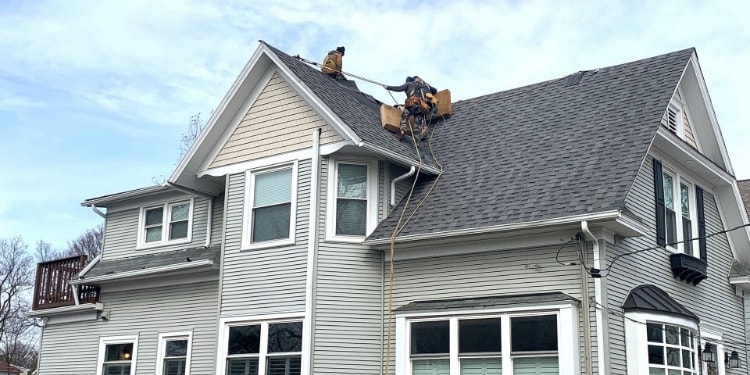
Symmetrical, moderate pitch, and comparatively simple geometry. The roof itself is usually the most straightforward in the Pointes. What needs attention is the detail: dentil moldings and cornice returns at the eave, where roof edge meets ornamental woodwork, and where a poorly executed drip edge or gutter can ruin a line that defines the house.
Steep pitches, multiple gables at varying heights, and roof planes that sweep down to unusual points. Frequently slate originally. These roofs have the most transitions per square foot of anything in the city, and they are the ones where a crew without period experience will produce something that looks wrong even when it does not leak.
Wide overhanging eaves with exposed rafter tails, low to moderate pitch, and deep porches. The exposed rafter tails are the vulnerability: they weather, they rot, and they are visible, so replacing them badly is immediately obvious. The deep overhang also creates a pronounced temperature differential at the eave, which matters for ice.
Less common but present, with clay or concrete tile and low-slope sections behind parapets. These are a separate discipline from asphalt work and should be treated that way. Individual tile replacement and flashing repair is usually the right answer rather than conversion.
Scattered through the city, generally conventional roofs with conventional needs. Ventilation is the item most often deficient.
One of the practical realities here is that neighboring houses may have entirely different roof systems, and a contractor who only installs asphalt will steer every conversation toward asphalt.
Our position is straightforward. A slate roof in serviceable condition should be repaired, not removed. Slate outlasts several asphalt roofs, and individual failed pieces plus tired flashing are both repairable. The same applies to clay tile.
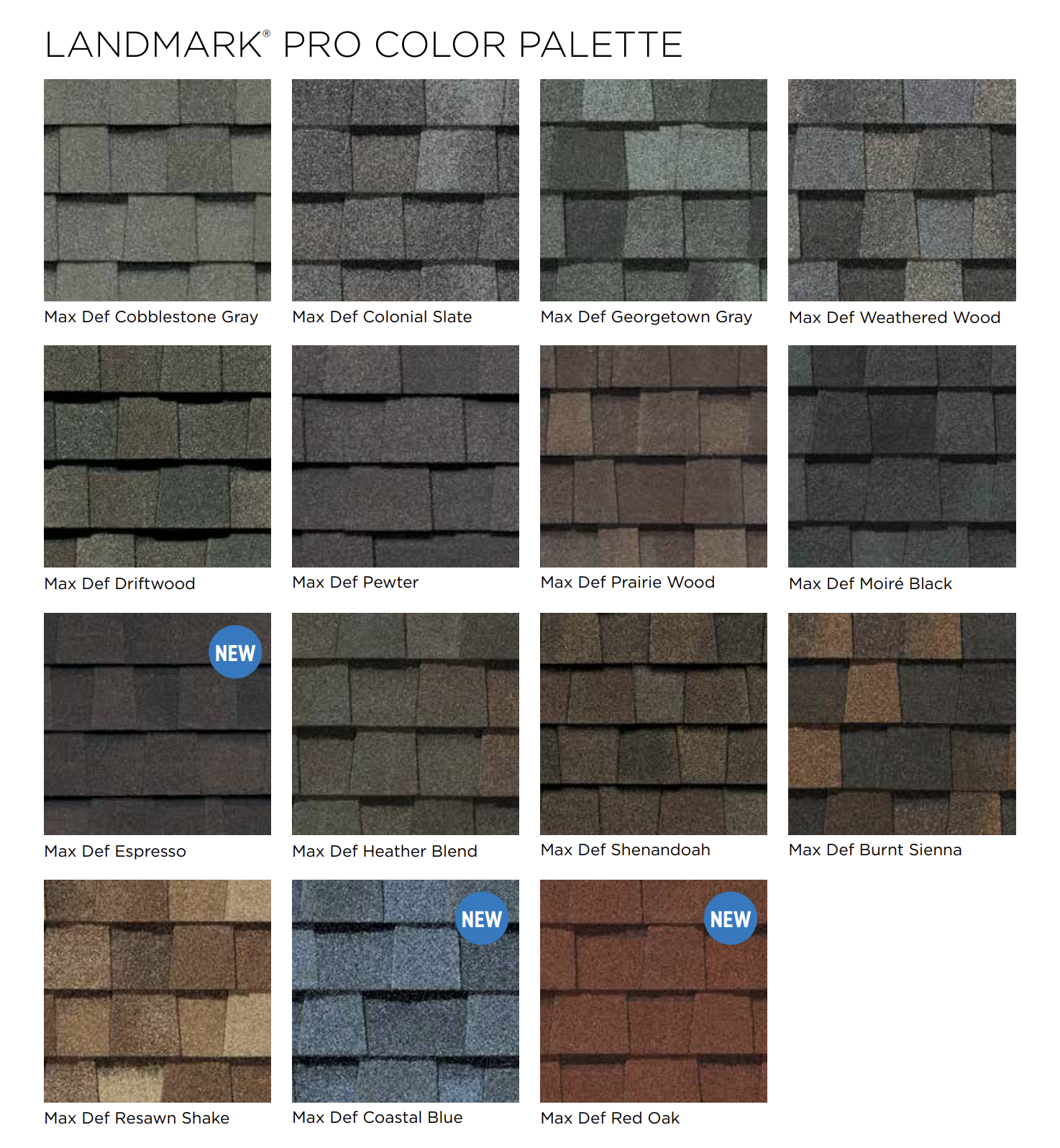
Where slate is genuinely at end of life, or where an earlier owner already converted to asphalt and you are replacing that, the conversation becomes which asphalt or composite profile does justice to the architecture. That is a real question with real answers, and it deserves more than a color chart.
Proximity to the lake produces a specific winter pattern. Northeast wind coming across open water carries moisture, and the lake moderates temperature enough to keep the region cycling through freeze and thaw rather than settling into a sustained deep freeze.
Repeated cycling is harder on a roof than continuous cold. It works at mortar joints, at flashing seams, and at the edges of every shingle or slate. On the steep Tudor rooflines it drives ice into valleys that should have been running clear.
The deep overhangs common on Arts and Crafts houses here amplify the effect. A wide eave is genuinely colder than the roof above the heated living space, which is exactly the differential that forms ice dams.
Grosse Pointe lots are modest and the houses are substantial, which means the working space between structures is narrow.
What that requires is planning rather than improvisation. Delivery and dumpster placement confirmed in advance against a street where parking is limited. Debris containment that accounts for a neighbor's property being close enough to reach. Protection for what is around the house, which here frequently means mature specimen plantings, stone or slate walkways, wrought iron, and masonry that would cost more to repair than the section of roof above it.
We walk the lot before quoting. A crew that arrives assuming suburban clearance will make decisions on your behalf, and on these properties those decisions get expensive.
Roof, attic, and the details that define the house.
Outside: every plane assessed separately, all valleys and transitions examined, chimney masonry and counterflashing evaluated, and any copper or metal detail checked for condition rather than assumed replaceable. On slate or tile we assess whether repair is viable before discussing anything else. Cornice work, rafter tails, and gutter condition get looked at as part of the roof rather than as separate carpentry.
Inside: staining, decking condition, and ventilation. Many houses of this era have limited or no intake ventilation because it was not standard practice when they were built, and on a steep roof with finished third-floor space that gets more complicated.
Three options here rather than two, which is not the case in most of our service area.
Repair addresses a specific failure: a flashing detail, a section of valley, individual slates, a chimney. On period homes this is frequently the correct and complete answer.
Restoration means bringing an original system back to serviceable condition rather than replacing it. On slate, that can mean resetting and replacing failed pieces, renewing flashing and valley metal, and getting decades more out of a roof that a volume contractor would have torn off.
Replacement is right when the system is genuinely finished, when decking is failing broadly, or when a previous conversion to asphalt is now at end of life. Then the question becomes what to put back.
On a Tudor or a Colonial Revival, the roof is a substantial share of what you see from the street. A flat-looking shingle reads wrong on a house with this much presence.
Heavier designer and dimensional profiles carry the shadow line these houses want, and slate-look composite products have become genuinely credible where original slate is not being retained. Standard architectural shingles work well on simpler houses and on secondary structures.
Copper is worth discussing for valley metal, chimney flashing, and small accent areas. It is more expensive up front and it lasts far longer than the roof around it, which on a house you intend to keep is a reasonable trade.
We install as a CertainTeed Master Shingle Applicator, which determines the manufacturer warranty coverage available.
Roof replacement requires a permit through the city with inspection at completion, and we pull it as part of every replacement contract.
The scheduling wrinkle here is street capacity rather than the permit itself. Narrow streets with limited parking mean a dumpster and a materials delivery occupy space that neighbors need. Coordinating that in advance, and giving the immediate neighbors notice, prevents most of the friction a roofing project generates in a dense city.
Storm claims on older, higher-value roofs need more careful documentation than a standard suburban claim, because the cost of proper repair on slate, tile, or copper is substantially above what an adjuster's default assumptions will produce.
We photograph in detail, specify materials and methods appropriate to the actual roof rather than to a generic scope, and meet the adjuster on site. Michigan contractor licensing is administered through the Michigan Department of Licensing and Regulatory Affairs, and confirming it is worth the two minutes.
We work throughout the City of Grosse Pointe, including the neighborhoods around the Village district on Kercheval, the streets running toward the lake, and the residential blocks along Maumee, St. Clair, and Neff. We also serve the neighboring Pointes and the surrounding east side communities.





Homeowners often assume the Pointes are interchangeable for contracting purposes. From a roofing standpoint they are not, and the City has its own profile.
It is the smallest and the most compact. Lots are narrower than in the Farms, and the houses sit closer to each other and to the street. That constrains staging and raises the stakes on adjacent property in a way that does not apply on a larger parcel.
It also has the widest architectural range packed into the smallest area. A contractor working here needs to shift approach house to house rather than settling into one method, which is a different demand than working a neighborhood built to a consistent pattern.
And the street network is tight. Where a dumpster sits and how long it sits there genuinely affects a block, which makes scheduling coordination part of the job rather than an afterthought.
The order is fairly consistent on period homes here, and it is different from newer construction.
Flashing and valley metal almost always go first, particularly where the original metal has reached end of life while the covering above it has not. On slate roofs this is nearly always the actual problem.
Chimney counterflashing follows, usually because a hundred years of freeze-thaw has opened the mortar joint it was set into.
Fasteners on slate corrode over decades, and slates begin slipping without the stone itself having failed.
Exposed carpentry at rafter tails and cornice returns weathers, and because it is visible, it tends to get noticed before problems that matter more.
The field covering is frequently last on a slate roof and first on an asphalt one, which is why the right diagnostic question depends entirely on what is up there.
Quotes in the City vary more than almost anywhere we work, and the spread is usually explained by scope rather than by margin.
What happens to the existing roof. Restoring slate and tearing it off are different projects with different price tags and permanently different outcomes. This is the single largest variable.
Pitch. Steep Tudor and English Revival rooflines require staging and fall protection, which multiplies labor hours per square against a walkable roof.
Transition count. Multiple gables, dormers, and valleys mean flashing work, and flashing is slow skilled labor rather than production installation.
Metal specification. Copper valleys and chimney flashing cost meaningfully more than aluminum up front and outlast the covering by decades.
Carpentry. Deteriorated rafter tails, cornice returns, and bargeboards are reproduction work, not replacement work.
Masonry. If tuckpointing has to precede flashing, that is another trade on the project.
Access and protection. Compact lots with valuable surroundings take longer to set up and longer to clean.
Period roofs reward attention differently than newer ones, mostly because the things that fail are not the things you can see from the driveway.
Look at valleys and chimney bases from a window or an upper floor once or twice a year. Metal failure shows before covering failure on nearly every house here.
Watch for slipped slates after hard winters. A slate lying at an angle or missing entirely is a fastener problem, and catching it early prevents water reaching the deck.
Keep gutters clear, particularly where a steep roof dumps a large area onto a short run. On houses with deep overhangs, gutter overflow saturates exposed carpentry that is expensive to reproduce.
And pay attention to ice at the eave. Persistent ice on the same overhang each winter is a ventilation and membrane conversation, not a seasonal inevitability.
Usually not. Serviceable slate should be repaired and reflashed rather than removed. Any contractor defaulting to a tear-off without discussing restoration is not the right fit for the house.
Standard three-tab would. Heavier designer profiles and slate-look composites read considerably better on steep period rooflines and are worth seeing in person before deciding.
Confirmed in advance, along with the delivery. Narrow streets and limited parking are exactly why this gets planned rather than improvised.
Deep overhangs run genuinely colder than the roof above heated space. That differential forms ice dams, and the fix involves ventilation and membrane rather than shingles.
Often closely, rarely perfectly, since weathering shifts color. We will show you what to expect before you commit.
Yes, and on a house you intend to keep it is worth discussing for valleys and chimney flashing. It outlasts the roof around it.
We assess each plane and detail individually, evaluate whether original materials can be restored, photograph what we find, and give you a written quote with no obligation.
Call 734-367-4867 or request an estimate online.