
If your home isn’t as warm as it should be in the winter or as cool as it should be in the summer, now may be the perfect time to address your home energy efficiency by turning your tax return into energy savings and financial savings. Homeowners can save about 10% of their total energy bills by sealing air leaks first, followed by adding insulation. Seal air leaks using caulk, spray foam, or weather stripping. Weatherizing your home this way is one of the most cost effective ways to improve energy efficiency and comfort. For a limited time, The Modern Pros are offering low cost attic and wall insulation options for Michigan homeowners.
Whether you are considering investing in solar panels, solar water heating, heat pumps or any other green source of energy for your home, the first step you should take is to improve your home’s insulation. This will ensure that you maximize the use of natural resources and don’t waste energy. If you skip this step, you will end up spending a lot of money buying a very powerful system to cover the energy needs of a badly insulated house.
Insulation is one of the most efficient ways to save energy at home since it keeps it warm in the winter and cool in the summer. In fact, the Energy Star estimates that in one year a typical three-bedroom semi-detached house can save up to $400 on energy bills by installing attic and cavity wall insulation.
Comfort • Efficiency
Upgrade your home’s comfort and energy performance with high-quality blown-in cellulose insulation, installed by Metro Detroit’s trusted full-service contractors. If your home feels drafty, uneven, or your utility bills keep climbing — insulation is the fastest, most cost-effective fix.
✔️Better Comfort & Lower Energy Bills
Dense, high-performance cellulose seals gaps and keeps temperatures stable through Michigan’s toughest seasons.
✔️Quieter, Cleaner Living
Reduces outside noise, dust, and pest pathways for a more comfortable home.
✔️Eco-Friendly & Fire-Resistant
Made from recycled materials and treated for safety — smart for your home and the environment.
✔️Helps Prevent Ice Dams
Proper attic insulation stops heat from escaping and protects your roof all winter long.
You may if you notice:
• Rooms too hot or too cold
• Rising energy bills
• Drafts or cold floors
• Ice dams on the roof
• Home built before 1990
We don’t just upgrade — we elevate your home.
Experience the comfort, efficiency, and savings of a properly insulated home.
Experiencing contractor anxiety? Tired of flaky, high-pressure salespeople or workers that don’t show up? Save the hassle, call The Pros.
Air that leaks through your home’s envelope − the outer walls, windows, doors, and other openings − wastes a lot of energy and increases your utility costs. A well-sealed envelope, coupled with the right amount of insulation, can make a real difference on your utility bills.
DTE Energy wants you to use less and save more. One way to save on energy is through insulation. Stop air from leaking in or out by sealing the leaks and keep your home more comfortable through insulation.
| Insulation | Minimum Requirements | Rebate Amount |
|---|---|---|
| Roof/Attic | 500 sq. ft. installed | $600 |
| Above-Grade Wall | 250 sq. ft. installed | $125 |
| Kneewall | 100 sq. ft. installed | $25 |
| Rim/Band Joist | 50 linear ft. installed | $50 |
| Basement Wall | 200 sq. ft. installed | $50 |
| Crawl Space Wall | 100 sq. ft. installed | $50 |
| Floor | 100 sq. ft. installed | $50 |
| Efficient Windows and Doors (U-value < 0.30) | ||
| Window Replacement | ENERGY STAR® for Northern Climate Zone (U-value < .30) | $15 per window (per unit) |
| Glass Patio Door Unit/Sliding Patio Door or Picture Window | ENERGY STAR® for Northern Climate Zone (U-value < .30). Opening must be at least 30 square feet. | $40 per unit |
Rebates are available on a first-come, first-served basis and customers are encouraged to apply early, as program funds are limited.
Not sure you qualify?
Sealing leaks and adding insulation can improve the overall comfort of your home and help to fix many of these common problems:
Most homes in the United States don’t have enough insulation and have significant air leaks. In fact, if you added up all the leaks, holes and gaps in a typical home’s envelope, it would be the equivalent of having a window open every day of the year!
For over 50 years the Applegate family has been increasing the comfort of America’s families with quality energy-saving products and exceptional service. Applegate is the world’s largest privately-owned cellulose insulation manufacturer, delivering premiere cellulose insulation to homeowners, through insulation professionals, builders and architects worldwide.
Today, the Applegate name is synonymous with Quality and Integrity. This website, resulting from over 50 years of dedicated study, application and, for the last 30 years, of manufacturing premium cellulose insulation, is designed to bring you the relevant information you need to make educated decisions regarding an insulation solution that you can trust.
Every project centers on one material we trust: borate-treated, recycled cellulose. Here's how we put it to work in Metro Detroit homes, and how we clear out the old material that's holding your house back.

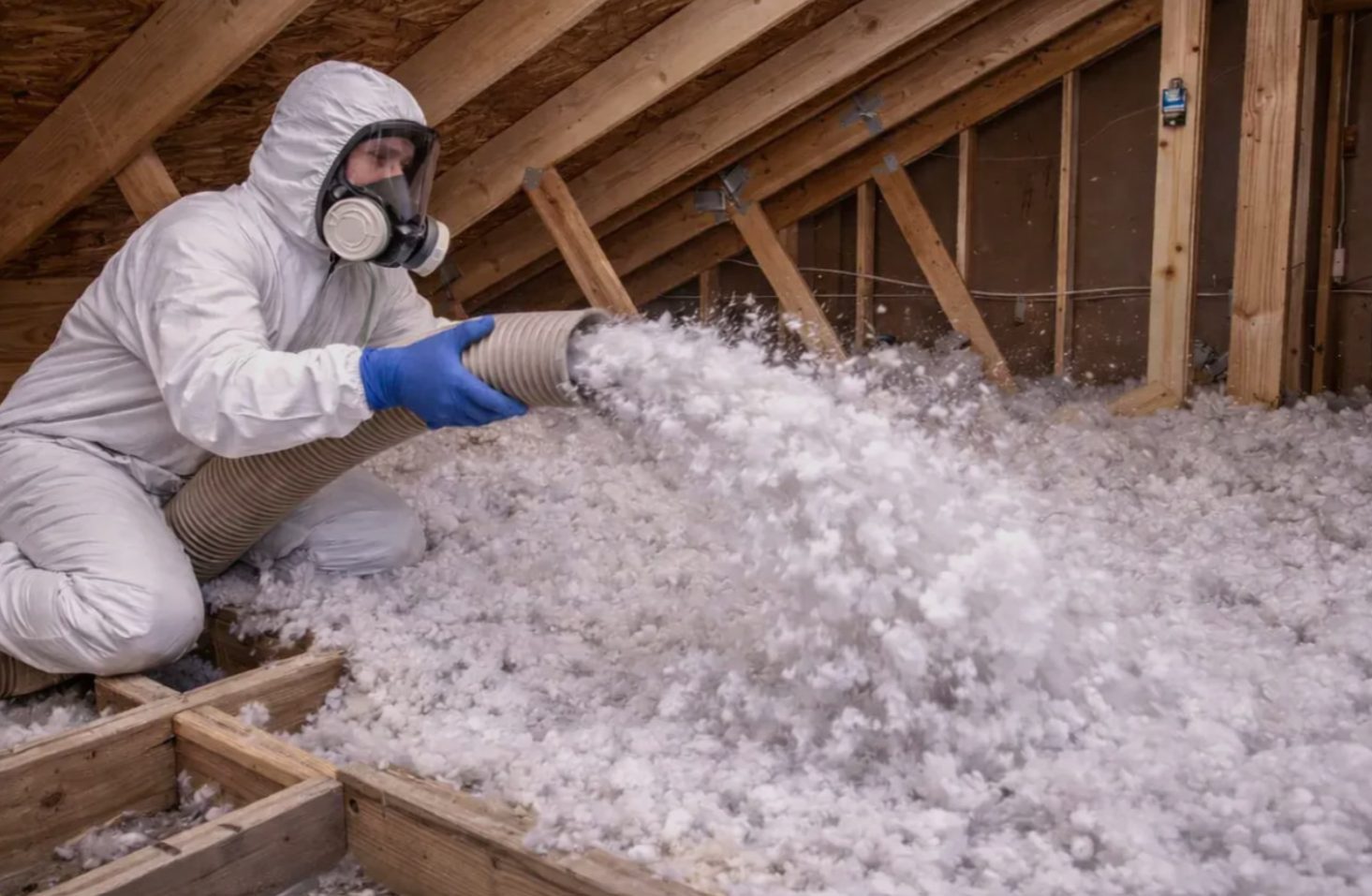
We seal the hidden air leaks in the attic floor, install baffles so your soffit vents keep breathing, then blow cellulose to a measured, settled depth.

Older homes often have empty exterior walls. We drill small holes, pack each stud bay with cellulose at a density that won't settle, then plug and patch.
Photo: Jennifer Dickert, CC BY 2.0

Wet, moldy, compressed or rodent-damaged material doesn't insulate. We vacuum it out with commercial equipment, clean and seal the attic, and start fresh.
Most attic projects are finished in a single day. Wall and removal projects usually take one to three days, depending on the size of the home.
We inspect your attic and walls, measure existing depth, and check for moisture, ventilation, rodent and safety issues.
You'll see whether we're topping up or removing first, the R-value we'll reach, and any utility rebate paperwork we can help with.
Floors are covered and hoses run from our truck. Old material comes out first if needed, then we air seal and blow in cellulose.
We clean up completely, leave depth markers in the attic, and walk you through the finished work before we leave.
Southeast Michigan sits in climate zone 5, one of the colder zones in the lower 48. These are ENERGY STAR's recommended levels for our region:
| Area of the home | Recommended |
|---|---|
| Uninsulated attic | R60 |
| Attic with 3–4 inches already in place | Add R49 |
| Empty exterior walls | Fill the cavities |
Quick self-check: if you can see the tops of your attic floor joists, you need more insulation. A properly insulated Michigan attic usually has well over a foot of blown-in cellulose.
Not every attic needs a full removal. If your existing insulation is dry, clean and simply too thin, we air seal and blow fresh cellulose right over it. That's the most affordable path to a big improvement.
Removal makes sense when the old layer has become part of the problem:
We'll show you photos from your own attic and explain which option fits your home and budget. You make the call.
Southeast Michigan has everything from 1920s brick colonials to 2000s subdivision homes, and each era has its own predictable weak spots.
Plaster walls with empty cavities, framing that lets air rise from the basement to the attic, and a thin layer of old material overhead. These homes gain the most from attic air sealing plus dense-packed exterior walls.
Usually some wall insulation but far too little overhead. Open, easy-to-reach attics make an air seal and cellulose top-up to R49–R60 fast, affordable and very effective.
Built to older codes, not today's recommendations. Settled builder-grade attics, cable runs that disturbed the insulation, and attic spaces over garages and behind knee walls are common trouble spots.
We install blown-in cellulose: loose-fill in attics and dense-pack in exterior walls. We also remove old or damaged insulation of any type and replace it with fresh cellulose.
Loose-fill settles slightly after installation, which is normal. We blow to the manufacturer's installed depth so the settled depth still meets your target R-value. Dense-packed walls are filled at a density that prevents settling.
Yes. Dense-pack cellulose goes in through small holes in each stud bay, from inside or from outside during a siding project. The holes are plugged and patched when we finish.
No. Cellulose is treated with borate, which gives it fire resistance and makes it unappealing to insects and rodents.
In most cases, yes. Ice dams form when heat escapes into the attic and melts roof snow. Air sealing, proper insulation depth and clear soffit ventilation keep the roof deck cold. It pairs well with our roofing services.
Not when it's done right. Cellulose travels through a hose from our truck straight into the attic, and we protect floors, cover the hatch opening and clean up thoroughly before we leave.
Utilities like DTE Energy and Consumers Energy have offered rebates for qualifying upgrades. Programs change, so we'll help you confirm current eligibility before your project starts.
Based at 12725 Stark Rd. in Livonia, we insulate homes across Oakland, Wayne, Washtenaw and Livingston counties. Choose your community for local details.
Don't see your city? We work throughout Metro Detroit. Call (734) 367-4867.
Get a free insulation evaluation from The Modern Pros. We'll measure what you have, show you where heat is escaping, and give you a clear written quote.
Call (734) 367-4867Request a Free Estimate