
Home » Roofing » Roofing Company in Ann Arbor, MI
Ann Arbor has the most varied housing stock of anywhere we work. A single street in the Old West Side can hold an 1890s Victorian, a 1920s bungalow, and a 1990s infill build, and all three need a different conversation. Homeowners looking for a roofing company Ann Arbor MI can rely on are usually dealing with one of three things: a complex older roofline nobody wants to touch, a historic district requirement, or a rental property that has been deferred a few years too long.
The other factor here is the trees. Ann Arbor's canopy is genuinely dense, and it changes how roofs age in ways that do not apply anywhere in Downriver. A north-facing slope under mature oaks in Water Hill ages on a completely different schedule than the same shingle on an open lot twenty miles east.
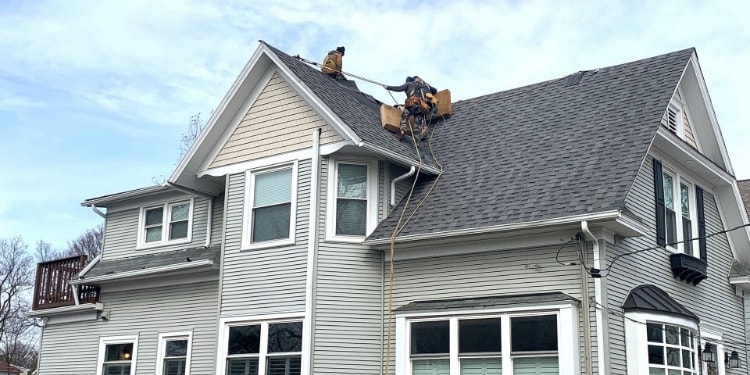
North-facing slopes under heavy canopy stay damp. Damp asphalt grows moss and the dark streaking caused by airborne algae, and moss is the more serious of the two. It holds moisture against the shingle, works its way under the edges, and lifts them as it grows. Left alone long enough, moss will physically separate a shingle from the course below it.
Pressure washing is the instinctive fix and it is the wrong one. It strips granules and takes years off the roof. Treatment and prevention are the right approach, and algae-resistant shingles are worth specifying on a shaded Ann Arbor roof.
Leaves, needles, and seed pods collect in valleys and stay wet. A valley that never dries is a valley whose underlayment is working continuously. On complex older rooflines with multiple valleys, this is a significant share of the leaks we get called about.
Gutters under a mature canopy fill faster than most homeowners plan for, and a full gutter backs water up under the roof edge.
Falling limbs cause obvious damage. The less obvious version is a branch resting on or near the roof that abrades granules off the same spot every time the wind moves it. We find bare, worn patches directly under overhanging limbs constantly, and the homeowner is usually surprised because the rest of the roof is fine.
Shade reduces UV exposure, which sounds like a benefit. In practice the moisture retention outweighs it. A consistently damp roof deck and a roof that dries slowly after every rain age faster overall, not slower.
Steep pitches, multiple gables, dormers, turrets, and roof geometry that was never designed with maintenance in mind. Original decking is plank rather than plywood, often with gaps between boards that affect fastener hold. Some of these still carry slate or clay tile, which is a different trade entirely and should be treated that way rather than torn off and replaced with asphalt by default.
Common across Burns Park, Water Hill, and the Old Fourth Ward. Simpler geometry than the Victorians but frequently deep overhangs, low-slope porch roofs attached to steeper main roofs, and chimneys that have been through at least one rebuild. The transition between the porch roof and the main wall is a recurring leak point.
The neighborhoods that filled in during the 1950s and 60s have more familiar roofs: moderate pitch, plywood decking, straightforward geometry. These usually need what any roof of that age needs, with ventilation being the most commonly neglected item.
Newer builds are generally sound but come with complex rooflines, and complexity means transitions. More valleys, more dormers, more places for an inexperienced crew to get flashing wrong.
Ann Arbor maintains several locally designated historic districts, and exterior work on a contributing property in one of them typically requires review before a building permit is issued. Roofing is exterior work.
What this means practically: material and color choices may be constrained, and replacing a slate or tile roof with asphalt may not be approved as a matter of course. The review adds time to the front of a project, which is manageable if you plan for it and genuinely disruptive if you discover it after signing a contract.
If your home sits in a district, confirm the requirements before you finalize materials. A contractor who has never mentioned historic review on a historic-district property has told you something about their experience in Ann Arbor.
A large share of Ann Arbor housing near campus is rental, and rental roofs get deferred longer than owner-occupied ones for understandable reasons. Nobody living in the house is going to notice a granule problem, and the owner may not have been on the property in years.
We work with landlords and property managers regularly, and the practical considerations are different. Scheduling around lease turnover matters, since a tear-off is far easier between tenants. Documentation matters more, both for the owner who is not local and for the eventual sale. And the repair-versus-replace calculation genuinely shifts when a property is held as an income asset rather than a residence.
We quote it straight either way. If a targeted repair buys you four years and that fits your plan, we will say so.
Every inspection covers the roof and the attic. On older homes the attic is often where the useful information is, because a century of previous repairs leaves evidence.
From the exterior we assess shingle condition slope by slope rather than overall, since shade means the north side may be years behind the south. We examine every valley for debris and membrane condition, check flashing at each transition, look at any chimney's mortar and counterflashing, and note limb contact or overhang.
From the attic we look for staining, daylight, and moisture on the underside of the deck, evaluate decking condition where it is plank rather than sheet, and check whether ventilation exists at all. Many pre-war Ann Arbor homes have no intake ventilation whatsoever, because the concept was not standard when they were built.
Complexity changes this calculation, because on a Victorian with eight roof planes the slopes genuinely age at different rates.
Targeted repair makes sense when the failure is confined to one plane or one transition, the rest of the roof has remaining life, and the geometry allows a clean tie-in. Replacing a single slope on a complex roof is legitimate work, not a compromise, provided the material can be matched acceptably.
Full replacement is the better call when multiple planes are failing, when the underlayment has aged out across the roof, or when the flashing detail is bad enough throughout that piecemeal repair means returning indefinitely. On older homes there is also a decking question: if the plank sheathing is failing, that is a whole-roof issue regardless of shingle condition.
On a shaded Ann Arbor roof, algae-resistant shingles are worth the modest premium. The copper granules that provide the resistance genuinely work, and on a north slope under canopy they prevent the streaking that otherwise appears within a few years.
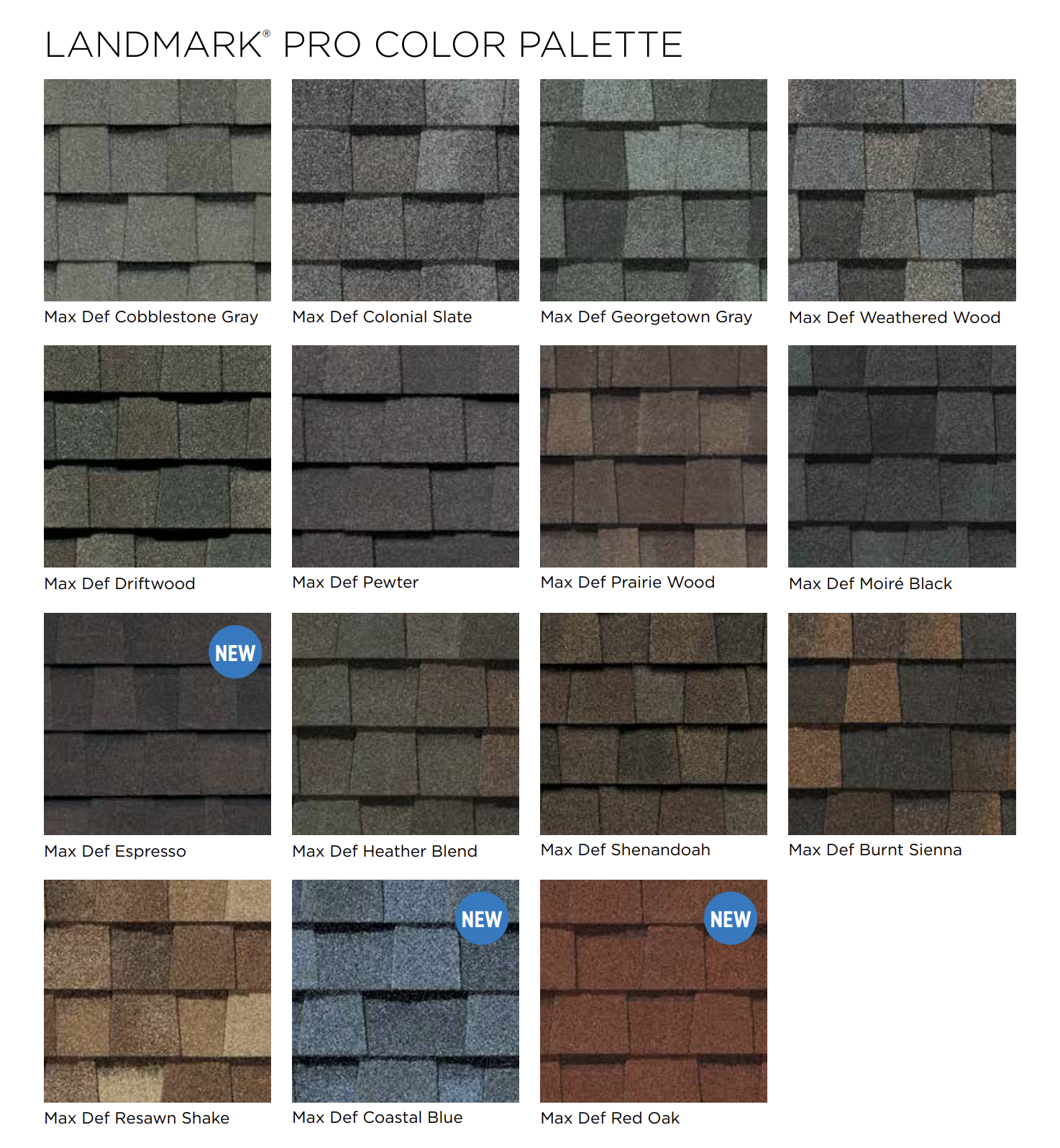
Architectural shingles are the standard recommendation. On steeper historic rooflines, heavier designer profiles that echo slate or shake are worth considering, both because the roof is highly visible and because historic district review may favor them.
Slate and clay tile are their own discipline. If your home has an original slate roof in serviceable condition, repair is almost always the better answer than replacement, and anyone quoting a tear-off without discussing that is not the right contractor for the house.
We install as a CertainTeed Master Shingle Applicator, which determines the manufacturer warranty coverage available on your roof.
Ann Arbor's tree cover means storm claims here frequently involve impact rather than wind alone. A limb through the roof is unambiguous. What complicates claims is the damage adjacent to the obvious strike, which is easy to miss and expensive to discover later.
We document thoroughly, produce an itemized scope in the format carriers expect, and meet the adjuster on site. Michigan contractor licensing is administered through the Michigan Department of Licensing and Regulatory Affairs, and verifying it takes about two minutes.
Roof replacement requires a permit through the city, with inspection at completion. We pull it as part of every replacement contract.
On a historic district property, historic review generally precedes the building permit. Sequencing those correctly is part of the job, and it is a common place for contractors unfamiliar with Ann Arbor to lose weeks.
We work throughout Ann Arbor, including the Old West Side, Burns Park, Water Hill, the Old Fourth Ward, Kerrytown, Ann Arbor Hills, and the newer neighborhoods on the north and west sides. We also cover the surrounding Washtenaw County communities.





Ann Arbor's neighborhoods were built in distinct waves, and the roofing problems track the era closely enough to be useful.
Old West Side. The largest historic district and the most likely place to encounter historic review, original slate, and plank decking. Roofs here are steep with significant geometry, and previous repair history matters as much as current shingle age. Expect the review process to add time.
Burns Park and Lower Burns Park. Predominantly early twentieth century, with the porch-roof-to-main-wall junction that generates so much of the interior staining we are called about. Mature canopy throughout, so algae and valley debris are near universal.
Water Hill and the Old Fourth Ward. Dense, tight lots, heavy shade, and a mix of owner-occupied and rental. Staging and material placement need planning here more than anywhere, since there is often no driveway to work from.
Ann Arbor Hills and the east side. Larger lots and mid-century construction. More conventional roofs, generally sound decking, and ventilation as the most common deficiency.
North and west side subdivisions. Newer construction with complex modern rooflines. Decking is fine, geometry is the challenge, and pipe boots are frequently the first thing to fail.
This is an Ann Arbor-specific scheduling reality that no other city on our service list has.
Late August is genuinely difficult. Move-in traffic, street closures, and parking conditions near campus make material delivery and dumpster placement harder than usual. If your property is in a rental-heavy area, scheduling around that window saves everyone friction.
Conversely, the periods between lease turnover are the easiest time to work on rental property. Tear-offs are noisy, and an empty house removes an entire category of coordination problems. Owners who plan ahead here get better scheduling and a smoother job.
Ann Arbor quotes vary more between houses than in any other community we serve, and it is not arbitrary.
Pitch is the biggest single driver. Above a certain slope the crew works from staging with fall protection, which multiplies labor hours per square.
Number of planes and transitions. Flashing work is skilled and slow. A roof with six valleys and three dormers has far more of it than a simple gable, regardless of square footage.
Decking condition. Plank sheathing may need overlaying before modern shingles can be warranted, and that is a real cost that only becomes knowable at tear-off.
Access. A tight lot with no driveway, mature landscaping to protect, and street parking restrictions takes longer than an open suburban lot.
Historic requirements. Material constraints can push you toward a more expensive profile than you would otherwise select.
This is why we quote from the roof rather than from square footage. Two Ann Arbor houses with identical footprints can legitimately differ by thousands.
We have been working Southeast Michigan for more than 25 years, and Ann Arbor is a regular part of that rather than an occasional trip west.
Practically: verifiable Michigan licensing, full liability and workers' compensation coverage, crews we employ rather than subcontract, permits pulled on every job, and enough experience with historic district work that we raise it before you do. We are a CertainTeed Master Shingle Applicator, which affects the warranty coverage available on your roof.
And the thing that matters most on an older house: we will tell you when the right answer is repair, or when your slate roof should be preserved rather than replaced. We would rather lose that job than take it.
More urgent than most people assume. Moss holds moisture against the shingle and lifts it as it grows. It should be treated, not pressure washed, since washing strips granules and shortens roof life.
Exterior work typically requires review before the building permit is issued, and material or color choices may be constrained. Build the review time into your schedule rather than discovering it mid-project.
Usually not, and often you should not. Serviceable slate is generally better repaired than replaced. Any contractor who defaults to a tear-off without discussing repair is the wrong fit for the house.
Regularly. We schedule around lease turnover where possible and provide documentation suited to owners who are not local.
Yes. Overhanging limbs abrade granules, drop debris into valleys, and keep slopes damp. Clearance is one of the cheapest things you can do for roof life in Ann Arbor.
Almost always shade. North-facing slopes under canopy retain moisture, grow moss, and age faster than the sunny side of the same roof.
We inspect the roof and the attic, assess each slope separately, photograph what we find, and give you a written quote with no obligation.
Call 734-367-4867 or request an estimate online.