
Home » Roofing » Roofing in Ann Arbor, MI
The material conversation in Ann Arbor is different from the one in most of Southeast Michigan, and it comes down to two conditions that barely register elsewhere: heavy shade, and roofs old enough that the original material may not be asphalt at all. Getting roofing Ann Arbor MI homeowners will be satisfied with long-term means accounting for both rather than defaulting to whatever goes on a suburban ranch.
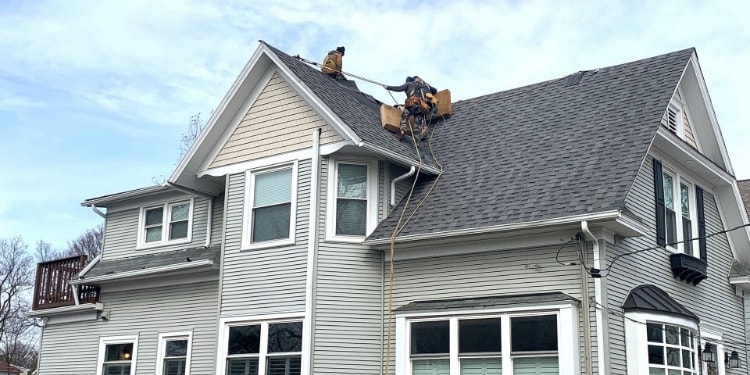
The black streaking on shaded roofs across Ann Arbor is airborne algae, and it is close to inevitable on a damp north slope without protection.
Algae-resistant shingles incorporate copper granules that inhibit growth, and the technology genuinely works. On an open sunny lot it is a cosmetic nicety. Under mature canopy it is the difference between a roof that still looks acceptable at year eight and one that is visibly streaked by year four.
Moss is the more serious relative. Algae stains; moss physically lifts shingles as it grows and holds moisture against them. Algae-resistant granules help with both, though on heavily shaded roofs trimming back overhanging limbs does more than any material choice.
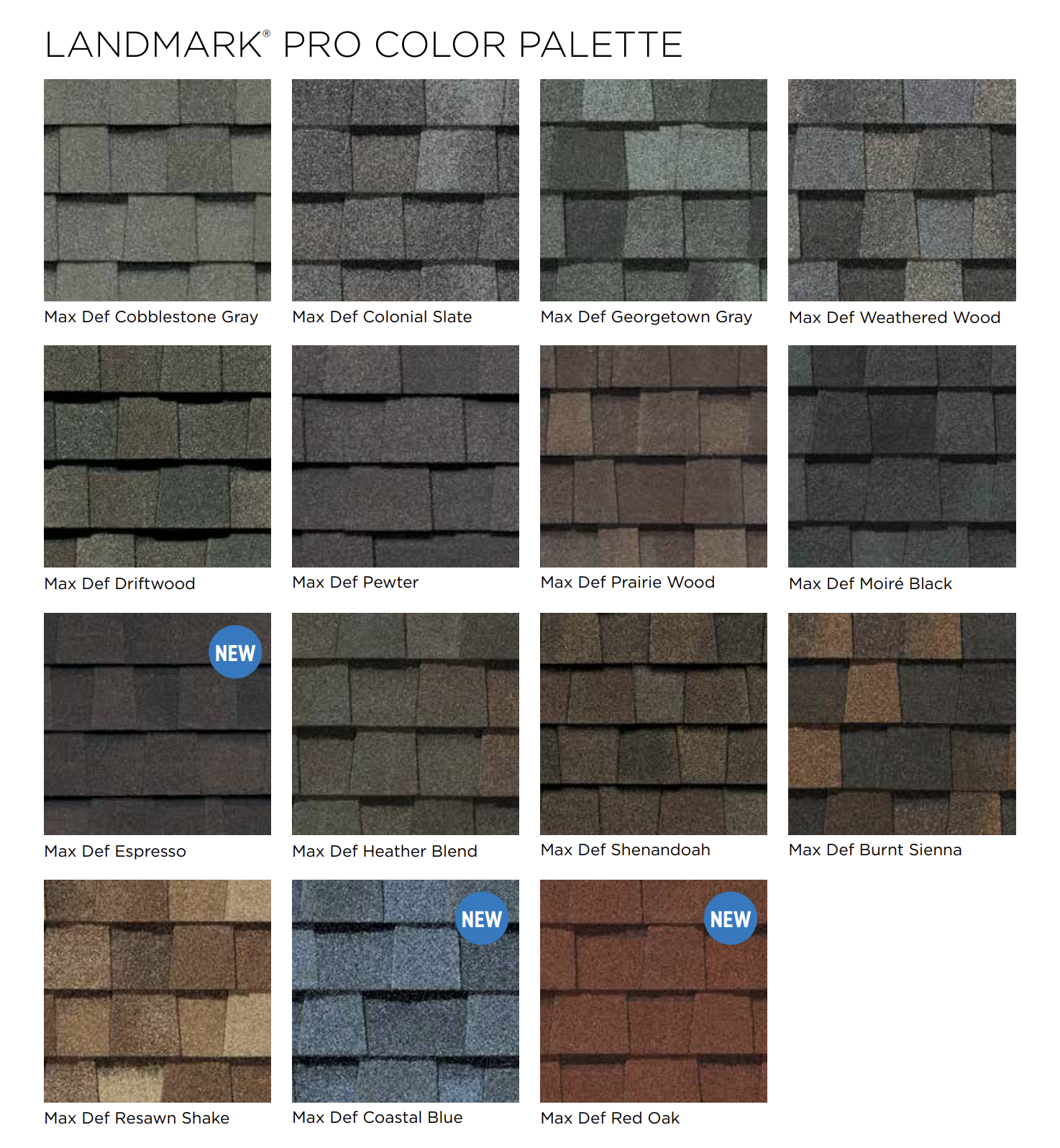
The standard recommendation, specified with algae resistance for any shaded slope. Laminated construction, better wind ratings than three-tab, and warranties that reflect the difference.
Worth genuine consideration in Ann Arbor for two reasons that do not apply elsewhere. On a highly visible historic roofline, the heavier dimensional profile reads correctly where a flat shingle reads wrong. And in a historic district, a slate-look profile may satisfy review where standard asphalt does not.
Rarely the right answer here. Lower wind rating, shorter life, and on a shaded roof it shows algae faster. Defensible on a rental with a short hold horizon and hard to justify otherwise.
We install as a CertainTeed Master Shingle Applicator, which determines what manufacturer warranty coverage is available.
Slate. Original slate roofs on Ann Arbor homes routinely outlast several asphalt roofs. Individual slates fail, flashing fails, and both are repairable. A serviceable slate roof should be repaired by a slate specialist rather than torn off. We will say so.
Clay tile. Same principle. Less common here than slate but present, and equally worth preserving where the tile itself is sound.
Standing seam metal. Occasionally the right answer on low-slope sections, porch roofs, and additions where asphalt performs poorly. Also sometimes favored in historic contexts where it matches what was originally there.
The honest framing: if your home has an original roof material in decent condition, the question is whether it can be repaired, not what to replace it with.
Ice-and-water shield goes at eaves past the interior wall line, in every valley, and around every penetration. On an Ann Arbor roof with many valleys, that is substantially more membrane than a simple roof requires, and it should be itemized rather than assumed.
Valleys deserve particular attention because canopy debris keeps them wet. A valley that never dries relies on its membrane continuously rather than occasionally.
Synthetic underlayment across the field, and on steep pitch it matters more than usual for a practical reason: it provides better footing during installation than felt, which affects both safety and installation quality.
Many pre-war Ann Arbor homes have no intake ventilation at all, because attic ventilation was not a design consideration when they were built. Others had it and lost it when insulation was added later and packed into the eaves.
The result is an attic that does not move air. In winter that drives ice dams. In summer it cooks shingles from below. Under a canopy, where the roof is already drying slowly, poor ventilation compounds a moisture problem that is already worse than average.
Adding intake to a home that never had it sometimes requires cutting soffit vents or installing edge venting at the eaves. It is more involved than a ridge vent and it is frequently the single highest-value item on an older Ann Arbor roof.
Gutters here fill faster than anywhere else we work. Leaves, needles, and seed pods, several times a season.
A full gutter holds standing water against the fascia and backs it up under the roof edge, which is why gutter neglect in Ann Arbor turns into carpentry work faster than it does elsewhere. Larger downspouts help with volume. Guards help with maintenance frequency, though none of them eliminate it, and any contractor claiming a guard is maintenance-free under mature oaks is overselling.




On a shaded Ann Arbor roof, yes. The premium is modest and the difference in appearance by year five is substantial.
Carefully, and never with a pressure washer. Pressure washing strips granules and shortens roof life considerably. Treatment products applied gently are the better route.
Depends heavily on whether intake exists. Adding a ridge vent is inexpensive. Creating soffit intake where there is none is more involved, and on many older homes it is the item with the best return.
They reduce cleaning frequency. They do not eliminate it. Anyone promising maintenance-free performance under mature oaks is overselling.
Common on older homes with additions and porches. Each section gets assessed on its own terms, and the scope should say which sections are being addressed.
Free inspection, slope-by-slope assessment, and an itemized written quote that reflects your actual roof rather than a template.
Call 734-367-4867 or request an estimate online.