
Home » Roofing » Roofing Company in Flat Rock, MI
Flat Rock sits at the southern edge of Downriver, and it is a different roofing environment than the dense inner-ring suburbs to the north. Lots are larger, tree cover is thinner, and a lot of the housing stock is considerably newer. When homeowners here search for a roofing company Flat Rock MI can rely on, the call is far more often about wind than about age.
That distinction shapes everything. A sixty-year-old roof in a sheltered neighborhood fails gradually, from the bottom up, as decking gives out. A fifteen-year-old roof on an open lot in Flat Rock fails suddenly, at the edges, when a squall line comes through with nothing between it and your house.
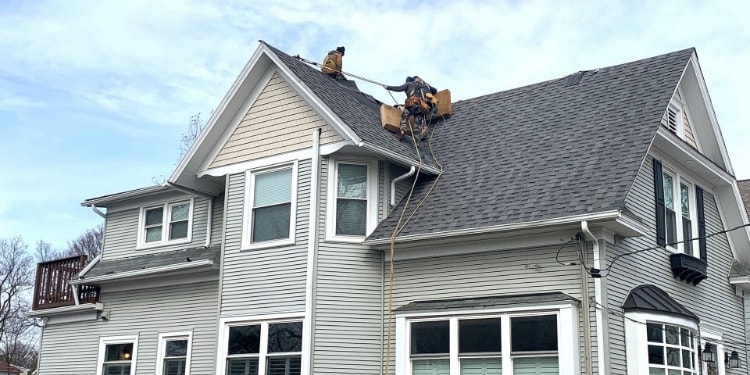
Much of Flat Rock was developed on former farmland, which means large lots, young trees, and long open sightlines. That is pleasant to live on and hard on a roof. Wind that would be broken up by a dense tree canopy and tight lot spacing arrives at full strength here, and it finds the edges first: rakes, eaves, ridge caps, and any shingle whose seal strip has already let go.
Wind damage rarely looks like damage from the ground. Shingles lift, the adhesive strip breaks, and they settle back down looking intact while water moves freely underneath. We find this constantly on Flat Rock roofs that homeowners believed were fine.
Flat Rock saw significant residential development in the 1990s and early 2000s. Those homes went up with builder-grade shingles, which is not a criticism so much as a fact of production building. Those roofs are now in the fifteen-to-twenty-five year window, which is exactly when builder-grade asphalt starts curling, losing granules, and shedding tabs in wind.
Entire streets tend to hit this point together, since they were built together. If your neighbors are getting roofs, that is not a coincidence and it is not a sales pitch.
The Huron River runs through Flat Rock, and proximity to it changes the moisture picture. Higher ambient humidity in the valley means attics that are already marginally ventilated tend to accumulate condensation. We find moisture damage on the underside of decking in homes where the shingles themselves still look serviceable.
Attic moisture is a roof problem that does not present as a roof problem. It shows up as musty smells, compressed insulation, and rusty nail tips visible from below.
Larger lots mean more structures. Detached garages, pole barns, and workshops are common in Flat Rock and almost universally neglected, because nobody notices a leak over a structure they enter twice a week.
These are usually low-slope or simple gable roofs, they are usually cheaper to redo than a house, and letting them go until the decking rots is how a manageable job becomes a framing repair. We quote them alongside the house.
The original core of Flat Rock has genuinely old housing stock, some of it well over a century. These need a different approach entirely: original plank decking rather than plywood, chimneys that have been rebuilt at least once, and roof geometry with more transitions than anything in a modern subdivision. More valleys means more places to get flashing wrong.
Every inspection covers both the exterior and the attic, because half the useful information is underneath.
On the roof, we check the seal on field shingles by hand rather than by eye, since wind-lifted shingles look normal from a distance. We examine every edge and transition, assess flashing at walls and penetrations, and look hard at ridge caps, which are the first thing to go in sustained wind.
In the attic, we look for staining, daylight at penetrations, condensation on the underside of the deck, and rust on nail tips. We measure insulation depth and confirm whether intake and exhaust ventilation are actually balanced. In the river valley especially, that ventilation check matters.
You get photographs, a written scope, and a clear separation between what is urgent and what can reasonably wait.
Wind damage complicates this decision in ways that ordinary aging does not.
Targeted repair works when damage is confined to one slope or one edge, the rest of the field still has good seal, and the roof is under fifteen years old. A single storm event on an otherwise healthy roof is a repair.
Replacement is the better call when seal failure is widespread rather than localized, when the roof is builder-grade and past twenty, or when repeated storms have progressively opened up multiple areas. Patching a roof whose adhesive strips have broadly failed means coming back after every storm indefinitely.
There is also an insurance dimension specific to wind claims. If a storm caused damage across enough of the roof, replacement may be a covered loss rather than an out-of-pocket decision, which changes the math considerably. That is worth establishing before you pay for a repair.
After a significant wind event, we prioritize active water intrusion. Tarping and drying-in comes first, full assessment second, and we never open more roof than can be closed the same day.
If you have water coming in, call 734-367-4867 rather than waiting on a form.
Wind claims turn on documentation more than any other kind of roof claim, because the damage is genuinely hard to see and adjusters are appropriately skeptical.
We photograph lifted and creased shingles specifically, document seal failure rather than just missing tabs, produce an itemized scope in the format carriers expect, and meet the adjuster on site. A homeowner standing alone with an adjuster on a wind claim is at a real disadvantage, and not because anyone is acting in bad faith.
Contractor licensing in Michigan is administered through the Michigan Department of Licensing and Regulatory Affairs, and verifying it is worth the two minutes before you let anyone on your roof.
On a Flat Rock lot with real wind exposure, shingle selection matters more than it does in a sheltered neighborhood.
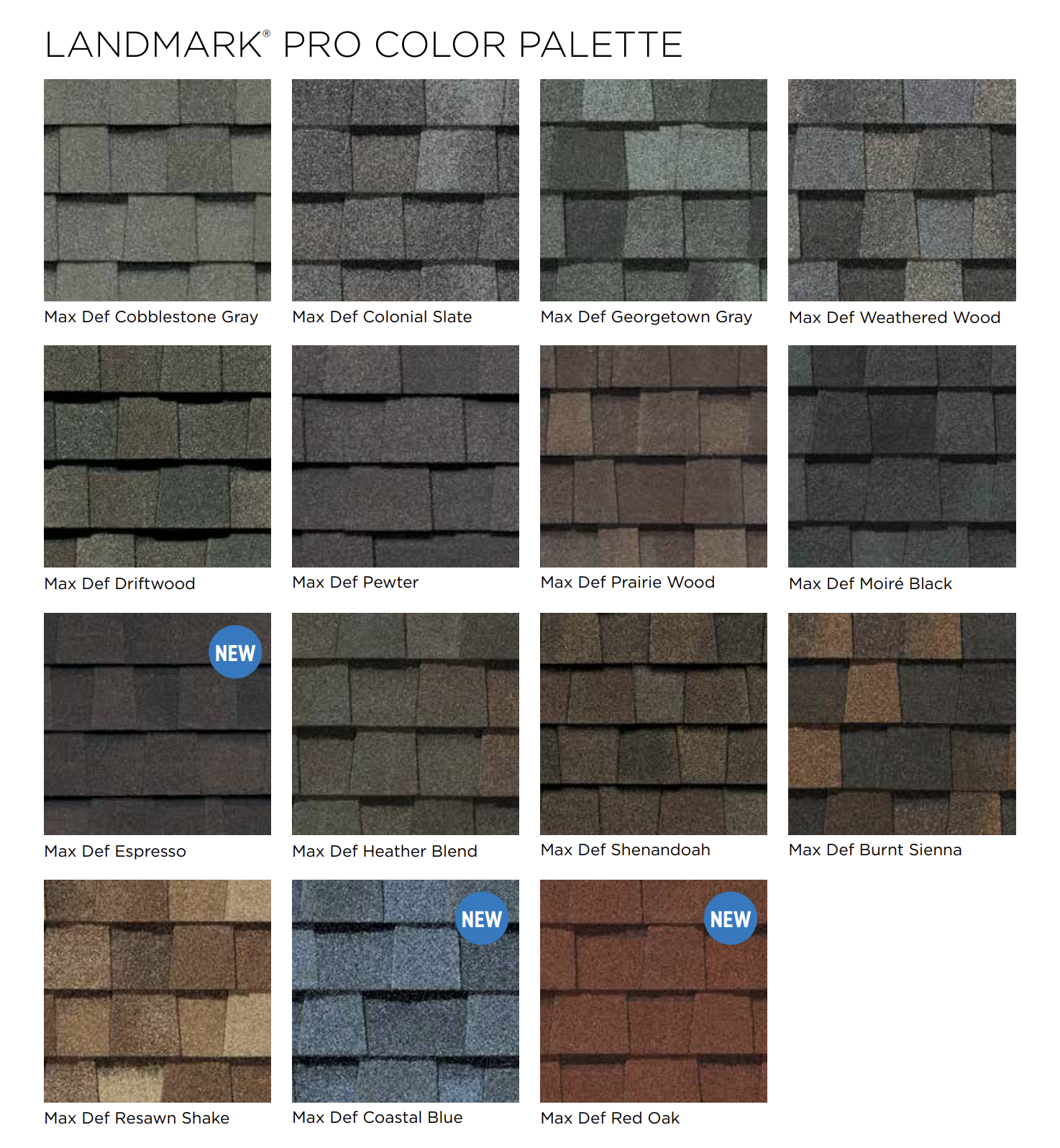
Architectural shingles are the baseline recommendation. They are heavier, they carry substantially better wind ratings than three-tab, and the laminated construction resists the lifting that starts most wind failures. On genuinely exposed sites we discuss upgrading further, since the cost difference is small relative to a second reroof.
Equally important and less discussed: starter strip at the eaves and rakes, correct nail placement and count, and properly sealed ridge caps. Wind rating on the package assumes a correct installation. A high-rated shingle installed badly performs worse than a modest shingle installed properly.
We are a CertainTeed Master Shingle Applicator, which affects the warranty coverage available on your roof.
Roof replacement in Flat Rock requires a permit through the city, with inspection at completion. We pull it as part of every replacement contract.
One local wrinkle worth knowing: Flat Rock straddles the Wayne and Monroe county line. If your property sits on the Monroe County side, confirm your contractor knows which jurisdiction applies to your address. It is a small thing that occasionally trips up out-of-area crews.
We work throughout Flat Rock, from the subdivisions off Telegraph and Gibraltar to the older streets near the village center and the larger properties toward the Monroe County line. We also cover the neighboring Downriver communities, and Flat Rock is well within our regular service radius rather than an outlying stop.





Because Flat Rock developed in distinct waves, you can usually place a roof's remaining life just by knowing when the house went up. This is a rough guide, not a substitute for an inspection, but it tells you whether to be curious.
Homes built before 1960, near the village center. These have almost certainly had two or three roofs. The question is not the shingles but what is under them: original plank decking with gaps, chimneys that have been rebuilt, and roof geometry with enough transitions that flashing history matters more than shingle age.
Homes from the 1960s through 1980s. Frequently carrying a second layer added in the 1990s. If yours is at two layers, Michigan code means your next roof is a full tear-off regardless of what anyone quotes. Worth knowing before you compare prices, because a tear-off quote and a layover quote are not comparable.
Subdivision homes from the 1990s and 2000s. The largest group in Flat Rock and the one currently in the replacement window. Original builder-grade shingles are now fifteen to thirty years old. Watch for granule accumulation in gutters, curling at the corners of individual shingles, and tabs missing after storms.
Anything built after 2010. Generally too young for replacement, but not too young for wind damage or a failed pipe boot. Newer does not mean immune, it means the failures are specific rather than general.
Most jobs here run one day. Here is the actual sequence so nothing surprises you.
A few days before. Materials get delivered. On larger Flat Rock lots we have room to stage the load away from your driveway, which we coordinate with you rather than guessing. The permit is pulled during this window.
Morning of. Crew arrives early. Landscaping, AC units, and siding get protected before anything comes off. On properties with outbuildings we confirm access and clear routes first.
Tear-off. Down to bare deck. Every sheet of sheathing gets inspected as it is exposed. If we find rot, you see it while it is open and it comes out of the per-sheet allowance already priced in your contract.
Dry-in. Ice-and-water membrane at eaves, valleys, and penetrations, then synthetic underlayment across the field. At this point the house is weathertight even if the day goes sideways.
Shingles. Starter strip at eaves and rakes, then the field installed to the high-wind nailing specification, then flashing, new pipe boots, and ridge vent.
Cleanup and walkthrough. Magnetic sweep across the full work area. On large lots that means well past the drip line, because debris travels further when there is nothing to stop it. We walk the job with you before leaving, and the city inspection closes the permit out.
On an exposed lot, a few habits meaningfully extend roof life and none of them require a contractor.
After any storm with real wind, walk the perimeter and look for shingle pieces in the yard. Finding granules or tab fragments means the roof took damage even if it looks fine from below. Check gutters in spring and fall, since heavy granule accumulation is the clearest early sign that shingles are giving up.
Keep soffit vents clear. If you have had insulation added since the house was built, there is a reasonable chance the eaves got packed and your intake ventilation was quietly eliminated. Confirm that pipe boots are intact, since the cracked rubber collar is the most common leak on an otherwise healthy roof.
And get an inspection after any storm that took down branches in your neighborhood, whether or not you see damage. Wind-lifted shingles that resettled are invisible from the ground and they are the failure mode that turns into an interior leak eighteen months later.
We are rarely the lowest quote, and after a storm we are competing against crews who will beat us by a wide margin. The difference is what exists in year three.
We hold Michigan licensing you can verify, carry both liability and workers' compensation coverage, employ our crews rather than subcontracting them, pull permits on every job, and install to manufacturer high-wind specification rather than to whatever is fastest. We are a CertainTeed Master Shingle Applicator, which affects the warranty available to you.
Most importantly for a community that gets canvassed as heavily as this one: we have a Michigan address and we are still going to be at it when your roof needs attention again.
Often you cannot tell from the ground, which is the problem. Missing shingles are obvious, but the more common failure is a lifted shingle that resettled. That requires someone checking seal by hand on the roof.
Because the roofs went on at the same time with the same materials. Builder-grade shingles from the late 1990s and early 2000s are reaching end of life together. It is a cohort effect, not a coincidence.
Yes, and we would rather quote them with the house. Doing both at once is cheaper than two mobilizations, and outbuildings are usually the structures that have been ignored longest.
Frequently, if it is documented properly. Wind claims hinge on demonstrating seal failure and creasing, not just missing shingles. We document specifically for that.
Indirectly. Higher valley humidity makes attic ventilation more important, and under-ventilated attics accumulate condensation that damages decking from below. We check for it during every inspection.
Most homes are a single day. Larger subdivision homes with complex geometry, or jobs with significant decking replacement, can extend into a second.
We check the roof and the attic in person, hand-test shingle seal rather than eyeballing it, photograph what we find, and give you a written quote with no obligation.
Call 734-367-4867 or request an estimate online.