
Attic and wall insulation done right: we remove what isn't working and blow in fresh cellulose to the recommended depth.
Troy homes were built big, built fast and built to the standards of their day, which means a 1970s colonial off Big Beaver or a 1980s tri-level near Long Lake often has the square footage of a modern house but the attic of a much older one. The Modern Pros, based in nearby Livonia, work as the insulation contractor Troy homeowners bring in when a bonus room stays cold, the heating bill keeps climbing, or one end of the house never feels right no matter where the thermostat is set.
Troy is Oakland County's largest city, and its housing grew in waves as farmland became subdivisions from the 1960s on. Ranches and split-levels came first, two-story colonials followed, and later decades added contemporary customs, quads, townhomes and condos. Each style leaks heat in its own way. That is why this page is organized around the kind of house you own rather than a one-size-fits-all checklist. Whether you're comparing bids or just curious, it shows how an insulation contractor Troy, MI residents can trust approaches each one.
On larger homes, guessing wastes money. On Troy insulation projects, a 2,500-square-foot colonial can have four or five distinct thermal zones: the main attic, the attic over the garage, the attic pockets behind the bonus room's knee walls, a separate attic over the family room, and the exterior walls themselves. Before we write a scope, the insulation contractor Troy homeowners hire from our team walks the house with a thermal camera and measure what's actually in each space.
What the camera tends to show in Troy houses:
That picture lets an insulation contractor Troy residents can trust prioritize the spaces that matter, instead of simply adding more of the same material everywhere.
Here's what we typically find and recommend for the main home styles across the city. Your house may combine features of more than one, which is common after decades of additions. Either way, the insulation contractor Troy residents choose should tailor the plan to the house in front of them.
Troy's earliest subdivisions are full of brick ranches with long, low roofs. The good news: these attics are usually wide open and easy to reach. The bad news: the original layer was thin and has settled. Attic insulation Troy ranch owners need is straightforward—air seal the ceiling plane, add baffles at every rafter bay, and blow cellulose in to modern depth. Many of these ranches pair a brick front with sided gable ends and back walls, so wall dense-packing can be done from outside on the sided sections. For owners of these ranches, an insulation contractor Troy neighbors recommend can usually finish the attic in a single day.
Split-levels are tricky. They may have two or three separate attic sections at different heights, each with its own small hatch, or none at all. Insulating one attic section and ignoring the others leaves the house unbalanced. As an insulation contractor Troy split-level owners depend on, we map each level, find or create safe access to every attic section, and blow each one with cellulose to the same target. Above-grade exterior walls on the upper levels are good candidates for dense-packing.
The classic Troy colonial often has a bonus room or bedroom over an attached two-car garage, plus a family room with a fireplace. The room over the garage is the most common complaint we hear. Its comfort depends on the attic spaces wrapped around it: the triangles behind its knee walls and the flat attic above its ceiling. We seal and fill those spaces so the room finally keeps up with the rest of the house, and Troy insulation work feels complete.
Homes from the 1980s and 1990s with dramatic rooflines and skylights look great, but their attics are chopped into many small sections by hips, valleys and changes in ceiling height. Recessed lighting creates dozens of small leaks below. Blown cellulose is ideal here because a hose can reach pockets a person can barely see into. We seal every can light and chase we can reach from above, then fill each section. When a roof replacement is on the calendar, an insulation contractor Troy owners of custom homes hire can coordinate attic work with the roofing crew.
Attached homes like the quads in subdivisions such as Beaver Trail, or condominium communities like Northfield Hills, share walls and sometimes attics. Before any work, we confirm what the association controls. Our insulation contractor Troy crews are used to working within association rules and shared-structure limits. Inside the unit, we can often air seal and blow cellulose into the attic area above your ceiling, and remove old, matted material when it has been disturbed by previous repairs.
Bonus room never comfortable? Get a room-by-room plan from the insulation contractor Troy homeowners call first.
Call (734) 367-4867Request a Free EstimateBecause this issue comes up in so many Troy colonials, it deserves its own section. A bonus room over a garage is surrounded by cold: the unheated garage below, the attic spaces beside its knee walls, and the attic above its ceiling. The attic spaces are where the biggest, most fixable leaks hide, and they are exactly where cellulose works best.
Here's the approach our crews take:
Treating the whole envelope of that room, instead of just one side, is what finally evens out the temperature, and it's work an insulation contractor Troy colonial owners hire should plan as one coordinated job. It's also one of the most common reasons homeowners call an insulation company in Troy, and one of the most satisfying problems for an insulation contractor Troy residents hire to solve.
As an insulation contractor Troy homeowners rely on, The Modern Pros install one material: blown-in cellulose, loose-fill in attics and dense-pack in walls. Specializing lets our crews do it extremely well, and it suits the large, chopped-up attics and empty walls we find all over the city.
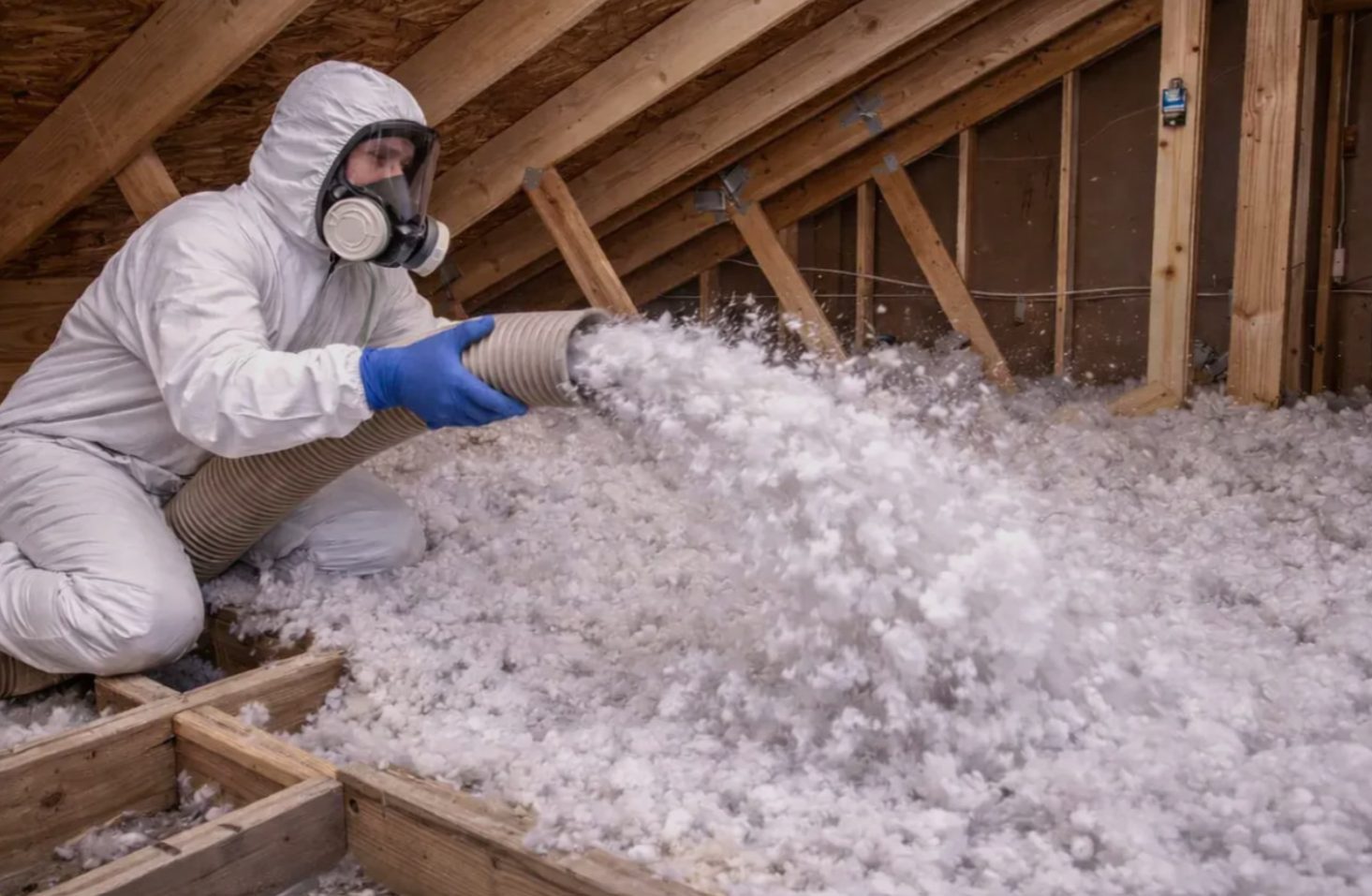
Cellulose is recycled paper fiber treated with borates. The borate treatment gives it fire resistance and helps it resist mold, insects and rodents. Because it is made mostly from recycled content, it is a practical choice for homeowners who want an upgrade with a smaller environmental footprint.
Large Troy attics are where blown-in insulation shines. Our blowing machine stays in the truck, and a long hose carries cellulose up through the attic hatch to every corner, including the far ends over the garage that are tough to reach on foot. Attic insulation Troy colonial owners request usually means reaching R60 across the whole floor, and blown cellulose gets there quickly and evenly.
Loose-fill cellulose settles slightly over its first months. We install to a depth that accounts for that settling, checked with rulers stapled to the framing, so the finished layer still meets the R-value in your proposal years later. Ask any insulation company in Troy you are comparing how they handle settling.
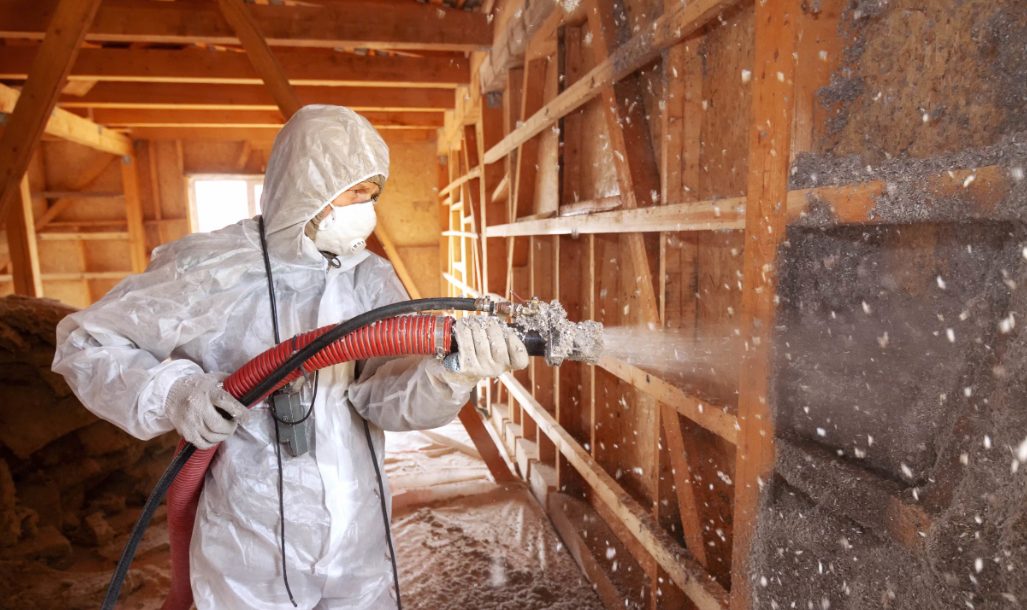
For closed exterior walls, we drill small holes, insert a fill tube and pack each stud bay until it is firm. Packed to the right density, the cellulose will not slump and leave a cold gap at the top of the wall. From inside, holes in drywall are plugged and patched. On vinyl- or aluminum-sided walls, we can lift a course of siding and drill behind it instead. If you are planning new siding anyway, that is the ideal time.
Many Troy households work from home, and a quiet office matters. Dense-packed exterior walls and a thick attic layer both dampen outside noise, from Big Beaver traffic to a neighbor's leaf blower. Packed fibers also resist air flow, which means fewer drafts at the desk.
Every house tells you when it's under-insulated, if you know what to look for. These are the clues that most often lead someone to call an insulation contractor Troy residents have used before:
If you recognize two or more, a whole-house assessment from an insulation company in Troy is a good next step. Most Troy insulation upgrades start with exactly this kind of observation from the homeowner.
Forty to sixty years is a long time for an attic layer to stay effective. We often find old fiberglass that has been compressed by storage boards, soaked by an old roof leak, or contaminated by mice or squirrels. Adding fresh material on top of a problem layer traps odors and moisture. Instead, our crews vacuum out the old material, clean the attic floor, air seal, and then install new cellulose. This removal step is a routine part of attic insulation Troy homes from the 1960s and 1970s often need.

If your existing layer is dry, clean and evenly spread, there is no need to remove it. We seal what we can reach and blow cellulose over the top. Full removal makes sense when the old layer is contaminated, wet, matted or hiding leaks we cannot otherwise reach. On a large Troy attic, the difference shows up clearly in the estimate, and we explain why we recommend one path over the other.
A commercial vacuum unit parks in the driveway, and its hose runs through the garage to the attic. Old material travels directly into sealed bags without passing through your living space. After the floor is clear, the crew sanitizes rodent-affected areas, completes air sealing, installs baffles and then blows fresh cellulose. Most Troy clean-outs and re-insulations finish in one or two days.
Troy sits in IECC climate zone 5. These targets come from ENERGY STAR's recommended home insulation R-values.
| Space | ENERGY STAR Target | Where We See It in Troy |
|---|---|---|
| Uninsulated attic | R60 | Attic sections over additions and some garage attics |
| Attic with 3–4 in. existing | Add R49 | Original 1960s–1980s attics that have settled |
| Exterior walls with empty cavities | Fill empty cavities | Dense-pack cellulose in early ranches and colonials, ideally before re-siding |
ENERGY STAR estimates that homeowners can save an average of about 15% on heating and cooling costs by air sealing and adding insulation. In a larger house with multiple zones, balancing comfort between rooms is often what people notice first. That balance is the real goal of Troy insulation work.
Big attics mean big opportunities for air leakage. Every recessed light, bath fan, plumbing vent and wiring hole is a path for warm, moist air into the attic. In winter, that air melts snow on the roof and feeds ice dams; it can also cause condensation and frost on the underside of the deck.
Our air sealing scope includes:
As both roofers and insulation installers, our insulation contractor Troy team looks at whether your attic ventilation matches your roof. If you're planning a new roof installation, combining that work with attic upgrades is efficient. Clean, well-pitched gutters also help keep meltwater away from the foundation.
Not every homeowner wants to do everything at once. Here's how an insulation contractor Troy budgets can work with typically ranks improvements for Troy houses, from highest to lowest return:
Your visit from the insulation contractor Troy homeowners schedule with us begins with thermal imaging, depth measurements, a ventilation check, a moisture check and a look for vermiculite or damaged material. We also review bath fan exhaust routing and any recessed lights in insulated ceilings, because both affect how the attic should be finished.
You receive a written proposal for each zone of your home, with materials, target R-values and an optional phasing plan. We explain the reasoning so you can compare it with other bids on an equal footing.
Our crew lays floor coverings, protects furniture near the attic access and routes hoses through the garage rather than the living space whenever possible. Larger Troy homes often have attic access in a closet, so we clear and protect that area carefully.
Any removal comes first, then air sealing and baffles; cellulose follows to measured depth with attic rulers for reference. Wall holes are plugged and patched. The insulation installation itself usually takes one day for an attic project, longer when walls are included.
We finish with cleanup, a walkthrough and photos of every area, which also help with rebate paperwork and future resale. If anything doesn't match the plan, we fix it before we leave.
If we find old, damaged or rodent-contaminated material, we remove and replace it. If we find vermiculite, we recommend asbestos testing first; The Modern Pros also offer asbestos removal.
Depending on your utility and current program rules, rebates may be available. See the DTE Energy insulation rebate information and the Consumers Energy insulation rebates for the latest details. Financing is available for larger projects through The Modern Pros, which helps when a whole-house plan covers several zones, and you can check our current promotions.
As the insulation contractor Troy residents call from every section of the city, we work across town: subdivisions like Buckingham Woods and Maple Forest, quads in Beaver Trail, condos at Northfield Hills, and established neighborhoods near Boulan Park, Firefighters Park, Sylvan Glen Lake Park and the Stage Nature Center. We also serve homes around the Somerset Collection and the Big Beaver corridor, and older houses near the Troy Historic Village and the original Troy Corners area.
Outside Troy, we serve Clawson, Royal Oak, Sterling Heights and Madison Heights. Learn about our work as an insulation contractor in Rochester Hills, an insulation contractor in Bloomfield Hills and an insulation contractor in Auburn Hills. City services and permit details are on the City of Troy website.
Troy residents tend to research carefully before hiring. When comparing companies, ask whether they inspect every zone, whether they air seal before insulating, how they handle ventilation, and whether they document the work with photos. An insulation contractor Troy families trust should answer all of those without hesitation. Here's what you get when you hire The Modern Pros as your insulation company in Troy:
Learn more about our team and all of our insulation offerings.
It is exposed to the unheated garage below and the attic on its sides and above. Sealing and filling the knee-wall attics, plugging the joist bays under them and topping up the attic above usually solves it. We also check that heating ducts reaching that room are connected and insulated, since long duct runs through cold attic space are a frequent culprit in Troy colonials.
Yes. Split-levels often have several attic sections at different heights and a partly below-grade level. Each attic section needs its own access and its own full depth of cellulose. Treating only the largest attic section usually leaves the house unbalanced.
Expect an hour or so of measuring, thermal imaging and attic and wall checks, followed by a written proposal. You're welcome to follow along; most homeowners find the thermal camera images eye-opening.
Often, yes, inside your unit. We'll confirm what your association controls first, and we can provide documentation for the board if approval is required.
Dense-packed cellulose in the exterior walls noticeably reduces outside noise, and a deep attic layer quiets rain and wind overhead. It's a popular upgrade for upstairs home offices facing a busy street.
Homes from the 1990s often met the codes of their day but fall short of today's guidance, especially in attics and bonus rooms. An assessment from an insulation contractor Troy homeowners trust will tell you whether an upgrade makes sense.
Balanced comfort in every room. Call the insulation contractor Troy residents trust for a free estimate.
Call (734) 367-4867Request a Free Estimate