
Blown-in cellulose for attics and walls, plus removal of old, damaged insulation, installed by a local Livonia crew.
Anyone who lives in "The Woods" knows these brick houses were built with care, and most owners also know how cold the upstairs bedrooms feel by mid-January. As the insulation contractor Huntington Woods homeowners call when a handsome older house refuses to hold its heat, The Modern Pros help families between Woodward Avenue and Coolidge Highway keep their character homes comfortable without stripping away the plaster, trim and rooflines that make them worth owning.
We are a full-service exterior and home-improvement contractor based in Livonia, licensed and insured, and working as an insulation contractor Huntington Woods families can rely on is part of what we do every week. This page explains what makes houses in this small city different, why blown-in cellulose is the one material we install, how old insulation comes out, how the work is done, and what it typically involves for a home on Hendrie Boulevard, York Road or any of the quieter side streets near the Detroit Zoo and Rackham Golf Course.
The city marks its 100th year in 2026, and it still calls itself the "City of Homes" for good reason. There is no strip-mall district here, just tree-lined residential blocks. Much of the housing went up from the 1920s through the 1950s: brick colonials, Tudors with steep gables, gable-front colonials and tidy brick bungalows and ranches. Larger, more stately houses tend to sit closer to Woodward, while smaller three-bedroom homes fill the blocks farther west.
Those decades produced durable masonry and real hardwood, but builders of that period rarely put much, if anything, inside exterior walls. Attics might hold a few inches of loose material that has settled over ninety years, and some contain vermiculite. The result is a familiar pattern we see on almost every visit:
None of that means the house is flawed. It simply means it was built before modern energy codes, and it can be brought up to date carefully. That careful upgrade is what we mean by Huntington Woods insulation work: improving comfort while respecting the original structure. It is also why an insulation contractor Huntington Woods homeowners hire needs to understand older construction, not just how to run a blowing machine.
Older homes reward a methodical approach from an insulation contractor Huntington Woods residents invite inside. Before we recommend a single bag of material, we look at how the house was framed, how air moves through it, and where moisture could become a problem once the envelope is tighter. Here is how that plays out in the parts of a typical Woods home.
Nobody wants to tear out original plaster just to get insulation into a wall. For hollow exterior walls, we use a drill-and-fill method: small holes are drilled at each stud bay and the cavity is dense-packed with cellulose until it is firmly filled. Holes are plugged and patched afterward by the insulation contractor Huntington Woods crew. Dense packing slows air movement inside the wall as well as heat flow, which is exactly what a drafty plaster wall needs.
Many colonials and Tudors here have a converted upstairs with sloped ceilings and short knee walls. These spaces are notoriously hard to keep comfortable because the knee walls separate a heated bedroom from an unheated attic wedge, and the floor of that wedge is usually bare or covered with old batts that slumped out of place long ago. As your insulation contractor Huntington Woods specialists, we pull out that tired material, seal the open joist bays that run under the knee walls by dense-packing cellulose into them as an air plug, and blow a deep layer of loose-fill cellulose across the wedge floor.
That joist-bay detail matters more than most people expect. In a typical Woods half-story, the floor framing under the bedroom continues straight out under the knee wall into the cold wedge. Winter air can travel through those open bays and chill the floor of the room above. Packing each bay tight with cellulose stops that path without touching your finished plaster.
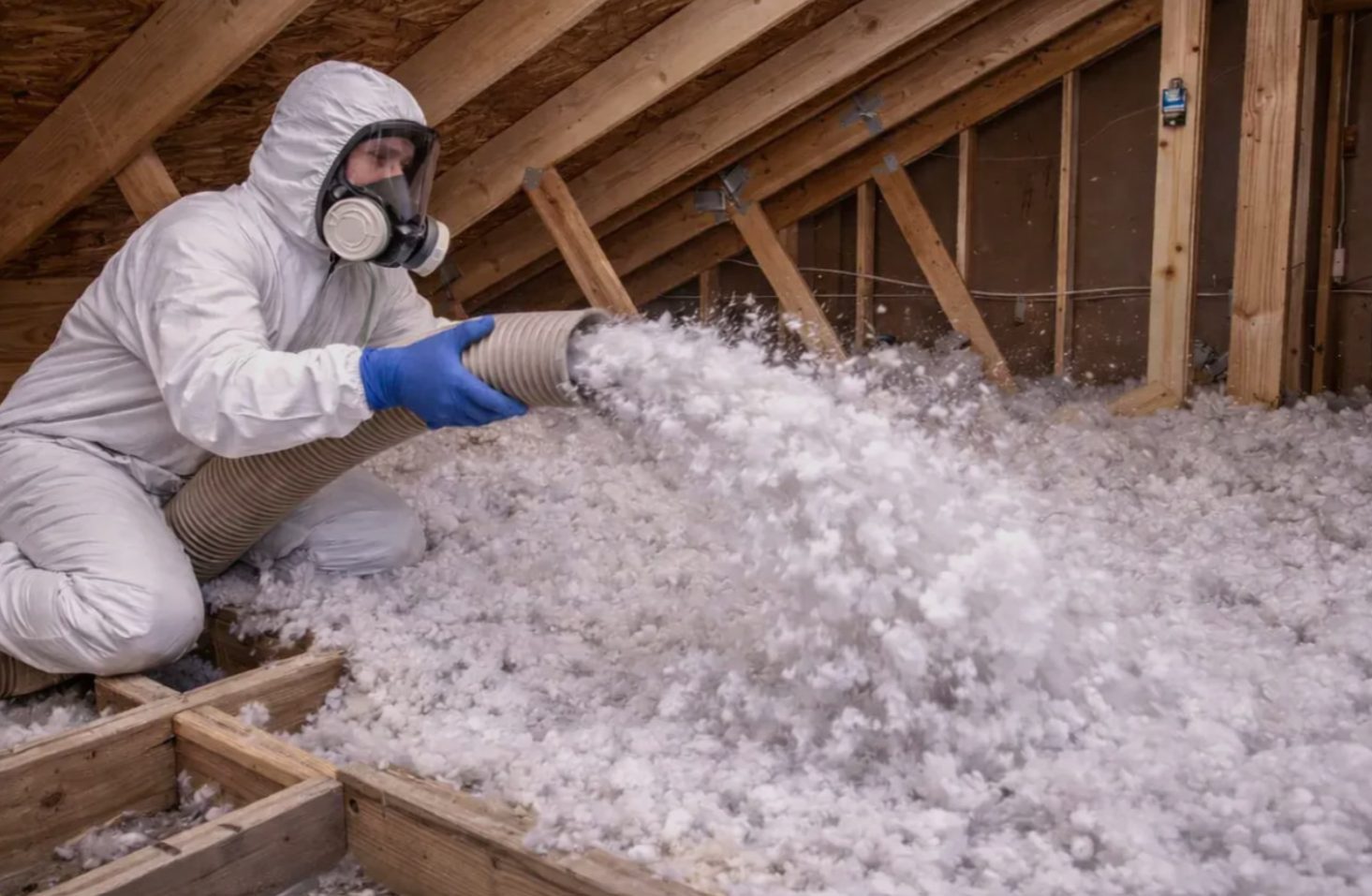
Where there is an accessible attic floor, attic insulation Huntington Woods homes need usually starts with air sealing and then a deep layer of blown-in cellulose. Steep Tudor roofs give us room to reach generous depths, and we install baffles at the eaves so ventilation keeps working once the attic floor is buried.
Drill-and-fill looks a little different depending on what covers the wall. On sided sections, we can remove a course of siding, drill the wall behind it, fill and plug, then put the siding back. Solid brick fronts are usually filled from inside, through small holes in the plaster that our crew patches and leaves ready for your painter. Mixed homes, with brick below and siding on the upper gables, often get both approaches on the same day. If you are already planning new siding, that is the easiest time of all to dense-pack the walls from outside.
Every house is different, but as an insulation contractor Huntington Woods homeowners know, we have built our insulation work around one material that suits older homes exceptionally well: cellulose. Rather than juggling several products, our crews have mastered blowing it into attics and dense-packing it into closed walls. As an insulation company in Huntington Woods that also handles roofing and exterior work, we can explain exactly how it interacts with the rest of the house.

Photo: Jennifer Dickert, CC BY 2.0
Cellulose is made largely from recycled paper fiber, shredded fine and treated with borates. Those borates help the material resist fire, discourage mold and make it unappealing to insects and rodents. Because so much of it comes from paper that would otherwise be thrown away, it is one of the more environmentally friendly options for home insulation, which appeals to many Woods families who care about the trees overhead.
Attics above pre-war ceilings are rarely tidy. Joists vary in spacing, old wiring snakes across the floor, and plaster keys poke up between the lath. Blown cellulose flows around all of it and fills corners a hand-placed product would leave open. Cellulose does settle a bit after installation, so we blow to a measured depth that accounts for that settling and still reaches the target R-value over the long haul.
Inside a closed wall, the trick is density. We use a fill tube that reaches deep into each stud bay and blow until the material is packed tightly enough that it cannot slump later. A properly dense-packed cavity has no void at the top after the first winter. The packed fibers also resist air flow, which is why the cool, breezy feeling along exterior walls fades once the job is done.
Filled walls and a thick attic blanket also dampen sound. Families closer to Woodward Avenue or Eleven Mile often notice traffic noise softening after their walls are dense-packed.
Ready to warm up that upstairs bedroom? Talk with the insulation contractor Huntington Woods neighbors recommend and get a clear, written plan for your home.
Call (734) 367-4867Request a Free EstimateNinety years is a long time for insulation to sit undisturbed. Roof leaks, squirrels and mice leave behind wet, compressed or contaminated material that no longer works and can carry odors into the bedrooms below. An insulation contractor Huntington Woods owners hire should be ready to take that layer out completely, not just bury it.

Not every attic needs a clean-out. If the existing layer is dry, evenly spread and free of droppings, we can air seal through it where possible and blow new cellulose right over the top. Removal makes more sense when we find any of the following:
Our insulation contractor Huntington Woods crew runs a hose from a commercial insulation vacuum into the attic, so the old material travels straight out to sealed bags without being carried through your hallways. Once the floor is bare, we clean up remaining debris, sanitize areas affected by rodents, and then complete the air sealing that was impossible to do properly before. Fresh cellulose goes in last, giving you Huntington Woods insulation that starts clean. On the oldest blocks, removal is a common first step in our Huntington Woods insulation projects.
A handful of homes have an attached garage with its own small attic, sometimes connected to the main attic. When it is true attic space, an insulation company in Huntington Woods should treat it the same way: seal, baffle and blow cellulose to depth, so the garage roof area stops pulling heat from the house next to it.
Attic work is most pleasant for our crew in spring and fall, but we insulate year-round. In winter, the benefits are instant and obvious; in summer, a deep cellulose blanket on the attic floor can make an upstairs bedroom livable again. Many homeowners call an insulation company in Huntington Woods in late October, just as the furnace starts running hard, so booking in early fall helps you get on the schedule before the cold arrives.
Southeast Michigan falls in IECC climate zone 5, and the ENERGY STAR recommended insulation levels give a useful benchmark for planning. Here is how those numbers translate to the places we usually work in a Woods home.
| Area of the Home | ENERGY STAR Guidance (Zones 5–6) | What It Means Here |
|---|---|---|
| Uninsulated attic floor | R60 | Common in attics above original 1920s–1940s ceilings |
| Attic with 3–4 in. existing | Add R49 | Typical where a thin layer was added decades ago |
| Empty exterior wall cavities | Fill empty cavities | Dense-pack cellulose through small holes in plaster or behind siding |
Old attics that hold only a few compressed inches are almost always the place with the best return. ENERGY STAR puts the typical payoff at an average of about 15% saved on heating and cooling costs when a home is air sealed and insulation is added. Ask any insulation contractor Huntington Woods homeowners are considering to show you the R-value they plan to reach in each area.
Insulation slows heat; air sealing stops air. Older homes leak through dozens of small paths: plumbing chases, chimney surrounds, top plates of interior walls, light fixtures and the attic hatch. Warm, moist air rising through those gaps is a major cause of ice dams. When heat reaches the underside of the roof, snow melts, runs down to the cold eaves and refreezes into a ridge that pushes water under shingles.
Our air sealing work includes:
Because we are also roofers, our insulation contractor Huntington Woods crews look at the whole system. If your shingles are near the end of their life, it can make sense to coordinate attic work with a roof replacement from our roofing team, and to check that gutters and downspouts are carrying meltwater away from the foundation.
If you spot vermiculite, do not disturb it. It should be tested for asbestos first. The Modern Pros also provide asbestos removal services, so one company can handle testing coordination, safe removal and new cellulose installation in sequence.
Your insulation contractor Huntington Woods inspector starts in the attic, looks behind the knee walls, checks what is already on the attic floor and examines exterior walls for empty cavities. Where useful, your insulation contractor Huntington Woods technician uses a thermal camera to show you where heat is escaping. We also note existing ventilation, bath fan routing and any signs of moisture or past roof leaks.
You get a plain-language plan that lists each area, the material proposed, target R-values and what prep is involved. It also says plainly whether old material should be topped up or removed. We prioritize: air sealing and the attic first, then dense-packed walls if the budget allows.
Older homes have finishes worth protecting. Your insulation contractor Huntington Woods crew lays drop cloths and protects hardwood along the path to the attic access. We also make sure recessed lights and chimneys have proper clearances before any material goes down.
Any removal happens first, then air sealing, then baffles, then insulation installation. Walls are drilled, dense-packed with cellulose and patched. Attics are filled to measured depth, and we install depth markers so you can see the level later.
We clean up, walk you through the home insulation work, and show photos of areas you cannot easily see. That record is helpful for rebate paperwork and for whoever owns the home after you.
Part of the city is a designated historic district, and exterior alterations there may need review. Most work an insulation contractor Huntington Woods homeowners hire performs happens inside walls and attics, so it rarely changes how the house looks from the street. If your project includes new siding or exterior wall work, check the historic district information on the City of Huntington Woods website before you finalize plans, and we will coordinate around those requirements.
Depending on your utility and current program rules, rebates may be available for attic insulation, wall insulation and air sealing. Review the DTE Energy insulation rebate page and the Consumers Energy windows and insulation rebate page for current details. Program rules change, so we always recommend confirming eligibility before work begins.
As an insulation company in Huntington Woods homeowners can budget around, we also offer financing so you can tackle the most important areas now. Check our current discounts and offers as well.
As the insulation contractor Huntington Woods, MI residents call from every corner of town, we work throughout the city, from the "Front of the Woods" blocks near York Road to the homes lining Hendrie Boulevard and the streets around Scotia Park, Reynolds Park and Burton Elementary. We also serve the homes near the Huntington Woods Library and the Gilham Recreation Center, and the residential pockets bordering the Detroit Zoo and Rackham Golf Course.
Nearby, we help homeowners in Royal Oak, Pleasant Ridge, Ferndale and Oak Park, and you can read about our work as an insulation contractor in Berkley, an insulation contractor in Birmingham and an insulation contractor in Bloomfield Township.
Learn more about our company and the full range of insulation services we offer across southeast Michigan.
When you pick an insulation contractor Huntington Woods residents can trust, you want someone who sees the house as a system. That is especially true in a city where nearly every house predates modern energy codes. That outlook is how we approach every project, whether it is a quick attic top-up or full wall retrofit.
Yes. Dense-pack cellulose is blown through small holes drilled in each stud bay, from outside or inside depending on the wall. Once the cavity is full, holes are plugged and patched. Your plaster stays in place, and the wall stops leaking air and heat. It is the most requested wall service we provide as an insulation contractor Huntington Woods homeowners call for older houses.
In many colonials and Tudors here, the second floor sits under sloped ceilings and knee walls that were never insulated or sealed. Heat escapes into the attic wedges and cold air leaks back in. Sealing and filling the attic wedges behind those knee walls, including the joist bays beneath them, usually makes the biggest difference, and it is a job any experienced insulation company in Huntington Woods should know well.
We work on homes throughout the city, including those in the historic district. Because most insulation installation happens inside the house, it rarely affects the exterior. For any project that touches siding or exterior walls, we recommend checking city requirements first.
Leave it undisturbed and have it tested for asbestos. If it needs removal, our asbestos team can handle it before new insulation goes in, which keeps the project in one company's hands. Few firms can act as both asbestos abatement team and insulation contractor Huntington Woods homeowners need for the follow-up installation.
Most single-family attic insulation Huntington Woods projects, including air sealing, take one day. Wall dense-packing or larger whole-home jobs may take two or three days depending on access and size.
It helps significantly when paired with air sealing and proper ventilation. Keeping warm air out of the attic keeps the roof deck cold, so snow melts evenly instead of refreezing at the eaves. That is why attic insulation Huntington Woods homes receive from us always starts with air sealing.
Make your Woods home as comfortable as it is beautiful. The Modern Pros are ready to inspect your attic and walls and recommend the right Huntington Woods insulation plan. Call the insulation contractor Huntington Woods neighbors already trust.
Call (734) 367-4867Request a Free Estimate